
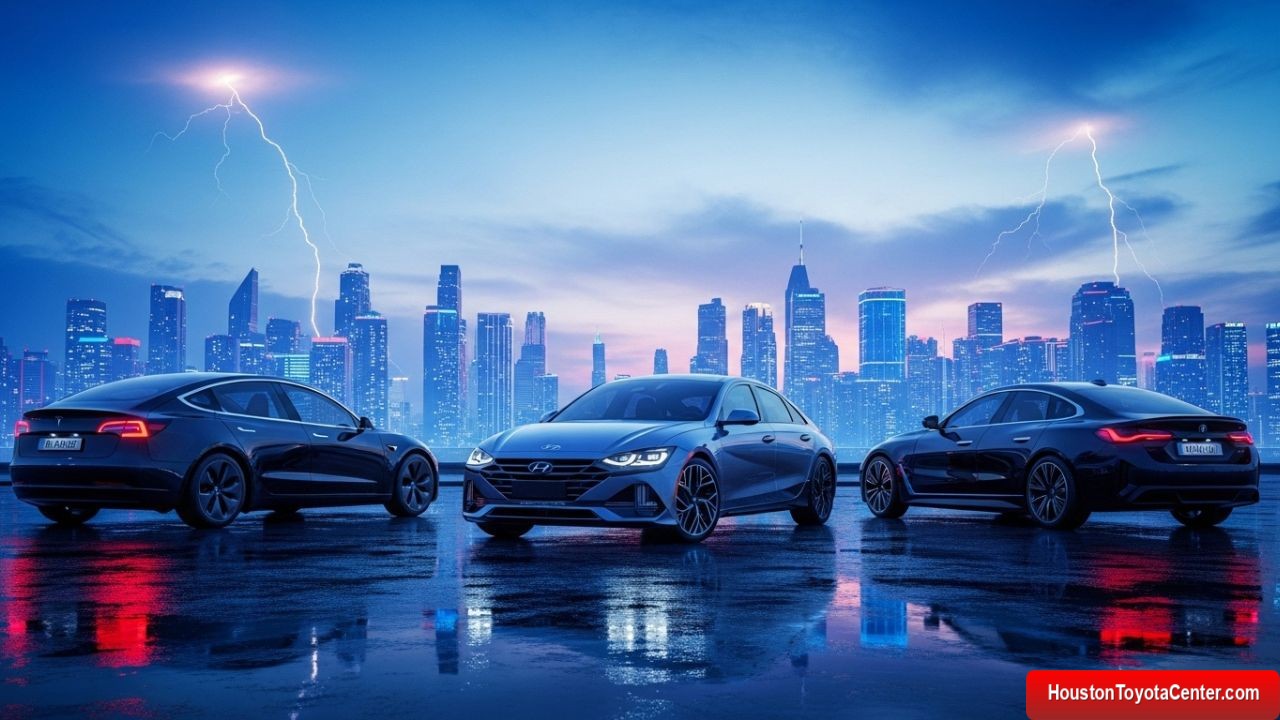
Electric vehicles (EVs) have transformed the automotive landscape, merging sustainability with thrilling performance and cutting-edge technology. Three standout contenders in the premium EV segment are the Tesla Model 3, Hyundai Ioniq 6, and BMW i4.
Each of these cars represents a different philosophy: Tesla’s minimalist innovation, Hyundai’s aerodynamic artistry, and BMW’s blend of performance heritage and electric refinement. But which one truly deserves your investment?
Let’s dive into a detailed comparison of these three EVs — from design and performance to range, features, charging, and ownership experience.
⚙️ Powertrains and Performance
Performance is often the defining factor for EV enthusiasts. All three vehicles offer multiple trims catering to different buyer preferences — from daily commuters to speed seekers.
FREE: Quickly identify and understand problems with your vehicle 🚘
CLICK HERE| Model | Powertrain Options | Horsepower | 0–60 mph (sec) | Drivetrain |
|---|---|---|---|---|
| Tesla Model 3 | RWD / Dual Motor AWD (Performance) | 271–455 hp | 5.8 – 3.1 | RWD / AWD |
| Hyundai Ioniq 6 | RWD / Dual Motor AWD | 225–320 hp | 7.4 – 4.4 | RWD / AWD |
| BMW i4 | eDrive35 / eDrive40 / M50 | 282–536 hp | 5.8 – 3.7 | RWD / AWD |
🔋 Tesla Model 3: The Tech Powerhouse
The Tesla Model 3 remains a benchmark for acceleration and efficiency. Its Performance version is blisteringly quick, sprinting to 60 mph in just 3.1 seconds. The instant torque from its dual motors ensures every press of the accelerator feels exhilarating. Tesla’s engineering also provides a near-perfect weight distribution, giving the Model 3 precise handling.
🌊 Hyundai Ioniq 6: Smooth and Balanced
The Ioniq 6 might not break necks with acceleration numbers, but it delivers exceptional smoothness and control. Hyundai’s E-GMP platform gives it a low center of gravity, while its AWD setup offers confident traction. The steering is light yet responsive, making it ideal for everyday driving.
🏁 BMW i4: Performance Meets Tradition
BMW infuses its electric sedan with its traditional DNA — precise steering, rear-biased balance, and strong power delivery. The i4 M50 in particular offers an impressive 536 hp, rivaling Tesla’s Performance trim. It’s the EV for those who crave sportiness with German refinement.
🔋 Range and Efficiency
EV buyers prioritize range — the distance a car can travel on a single charge. Here’s how they compare:
| Model | Battery Capacity | EPA Range (miles) | Efficiency (MPGe) |
|---|---|---|---|
| Tesla Model 3 | 57.5–82 kWh | 272–341 | 132 city / 120 highway |
| Hyundai Ioniq 6 | 53–77.4 kWh | 240–361 | 136 city / 111 highway |
| BMW i4 | 66–83.9 kWh | 256–307 | 109 city / 108 highway |
Tesla Model 3
Tesla continues to dominate in efficiency thanks to advanced aerodynamics and an optimized battery management system. The Long Range AWD model delivers around 341 miles, making it ideal for long-distance drivers.
Hyundai Ioniq 6
Surprisingly, the Ioniq 6 outpaces Tesla in some efficiency metrics. The RWD SE Long Range version achieves an EPA-estimated 361 miles, making it one of the most efficient EVs in the world. Its sleek teardrop shape, with a drag coefficient of just 0.21, contributes to this stellar figure.
BMW i4
The i4’s range is competitive, especially given its sporty tuning. The eDrive40 offers up to 307 miles, while the high-performance M50 sacrifices a bit of range for power. Still, BMW’s focus on real-world efficiency and energy recuperation is commendable.
⚡ Charging Capabilities
Charging speed is crucial for convenience on the road. Let’s see how fast each EV can replenish its battery.
| Model | Max DC Fast Charging | 10–80% Charge Time | Home AC Charging (240V) |
|---|---|---|---|
| Tesla Model 3 | 250 kW (Supercharger V3) | ~25 min | 7–9 hrs |
| Hyundai Ioniq 6 | 350 kW (800V system) | ~18 min | 7 hrs |
| BMW i4 | 205 kW | ~31 min | 8–9 hrs |
Tesla Model 3
The Supercharger network remains Tesla’s biggest advantage. Stations are abundant, reliable, and strategically located. The Model 3 can add up to 175 miles in just 15 minutes at peak charging speed.
Hyundai Ioniq 6
Hyundai’s 800V architecture allows ultra-fast charging, rivaling Porsche’s Taycan. At a 350 kW charger, it goes from 10% to 80% in only 18 minutes, making it the fastest-charging car in this trio.
BMW i4
While not the quickest to charge, the i4 supports 205 kW DC charging. With the Electrify America network partnership, BMW owners have decent coverage, though not as seamless as Tesla’s system.
🧠 Technology and Infotainment
Technology defines the EV experience — from infotainment systems to driver-assistance features.
| Model | Display | Infotainment System | Voice Assistant | OTA Updates |
|---|---|---|---|---|
| Tesla Model 3 | 15″ central touchscreen | Tesla OS | “Hey Tesla” | Yes |
| Hyundai Ioniq 6 | 12.3″ + 12.3″ dual screens | Hyundai Bluelink | “Hi Hyundai” | Yes |
| BMW i4 | 14.9″ curved display | BMW iDrive 8 / 8.5 | “Hey BMW” | Yes |
Tesla Model 3
The minimalist cabin features a single 15-inch touchscreen that controls virtually everything — from driving modes to glovebox access. It’s intuitive, futuristic, and receives frequent over-the-air updates, adding features like gaming, streaming apps, and even enhanced autopilot capabilities.
Hyundai Ioniq 6
Hyundai delivers a tech-rich environment with dual 12.3-inch displays, ambient lighting, and robust smartphone integration (Apple CarPlay and Android Auto). It also features Vehicle-to-Load (V2L) capability, letting users power small devices or even charge another EV.
BMW i4
BMW’s iDrive 8 system blends luxury and intuitiveness. The curved display and natural voice command system make it one of the best infotainment experiences in any EV. The interface feels premium, and updates are frequent and smooth.
🧍♂️ Interior and Comfort
EV interiors range from minimalist to opulent, and each car offers a distinct character.
| Model | Cabin Style | Cargo Space | Rear Legroom |
|---|---|---|---|
| Tesla Model 3 | Minimalist / Vegan Leather | 23 cu ft | 35.2 in |
| Hyundai Ioniq 6 | Tech-Modern / Sustainable | 12.4 cu ft | 39.2 in |
| BMW i4 | Premium / Sport-Luxury | 10–16.6 cu ft | 34.9 in |
Tesla Model 3
The cabin is minimalist to the extreme, emphasizing open space and modern design. The glass roof enhances the sense of airiness, though some drivers miss traditional buttons. Seating comfort is good, but the rear seats feel a bit tight for tall passengers.
Hyundai Ioniq 6
Hyundai focuses on sustainability and comfort — recycled materials, ambient lighting, and a lounge-like feel. Despite its sloping roofline, rear legroom is generous, and the cabin feels serene, almost cocoon-like during highway drives.
BMW i4
The i4’s interior feels undeniably premium. High-quality materials, solid ergonomics, and BMW’s signature driver-focused cockpit make it stand out. While space in the back is more coupe-like, the hatchback design adds versatility.
🧭 Driving Dynamics
Each EV drives with a distinct personality.
- Tesla Model 3: Feels agile and responsive. The steering is light, and instant torque provides thrilling acceleration. However, road noise can be noticeable at higher speeds.
- Hyundai Ioniq 6: Prioritizes comfort. The suspension absorbs bumps gracefully, and cabin isolation is impressive. It’s the most refined highway cruiser here.
- BMW i4: Feels the most like a traditional sport sedan. Steering precision, body control, and balance are excellent — it’s genuinely fun to drive.
🛡️ Safety and Driver Assistance
All three EVs score high in safety ratings and come loaded with driver-assist tech.
| Model | Safety Systems | Crash Rating (NHTSA) | Notable Features |
|---|---|---|---|
| Tesla Model 3 | Tesla Autopilot | 5 stars | Automatic lane change, adaptive cruise, collision avoidance |
| Hyundai Ioniq 6 | Hyundai SmartSense | 5 stars | Lane following, adaptive cruise, blind-spot camera |
| BMW i4 | BMW Driving Assistant Plus | 5 stars | Adaptive cruise, lane centering, traffic jam assist |
Tesla’s Autopilot system is the most advanced, continuously improving via OTA updates. Hyundai’s SmartSense suite impresses with intuitive lane keeping and driver attention alerts, while BMW’s system strikes the best balance between safety and engagement.
💰 Price and Value
| Model | Starting Price (USD) | Top Trim Price | Federal EV Credit Eligible |
|---|---|---|---|
| Tesla Model 3 | ~$38,990 | ~$54,990 | ✅ |
| Hyundai Ioniq 6 | ~$37,500 | ~$51,300 | ✅ |
| BMW i4 | ~$52,200 | ~$69,700 | ❌ |
Tesla Model 3
Offers outstanding value considering its performance and charging network. Maintenance costs are minimal, and software updates enhance long-term appeal.
Hyundai Ioniq 6
Provides exceptional efficiency for its price. The warranty (10 years on the powertrain and battery) makes it an excellent long-term investment.
BMW i4
The priciest of the trio, but it justifies the cost with luxury materials, driving dynamics, and prestige. Still, it lacks federal EV tax credit eligibility, which could affect affordability.
🌍 Sustainability and Brand Philosophy
- Tesla is a pioneer in pushing EV adoption globally. Its focus on over-the-air updates and a sustainable supply chain reinforces its eco-conscious image.
- Hyundai emphasizes recyclable materials and low-carbon manufacturing, taking sustainability seriously from design to production.
- BMW aims for carbon-neutral manufacturing and uses renewable energy across many of its factories, but its premium focus still places it in a luxury niche.
🏆 Verdict: Which One Wins?
| Category | Winner |
|---|---|
| Performance | 🏁 BMW i4 M50 |
| Range & Efficiency | ⚡ Hyundai Ioniq 6 |
| Charging Network | 🔌 Tesla Model 3 |
| Technology | 💻 Tesla Model 3 |
| Interior Comfort | 🛋️ Hyundai Ioniq 6 |
| Driving Experience | 🏎️ BMW i4 |
| Value for Money | 💰 Hyundai Ioniq 6 |
Final Thoughts
Each EV excels in different areas:
- Tesla Model 3 remains the tech-forward benchmark with the best charging ecosystem.
- Hyundai Ioniq 6 is the surprise efficiency champion — comfortable, futuristic, and budget-friendly.
- BMW i4 caters to drivers who value luxury and traditional performance.
The right choice depends on your priorities:
- Want cutting-edge tech and range confidence? Choose Tesla.
- Prefer comfort, design, and long warranty? Pick Hyundai.
- Crave sporty driving and prestige? The BMW i4 is your match.
No matter which one you choose, all three represent the thrilling and sustainable future of electric mobility.
Leave a Reply