
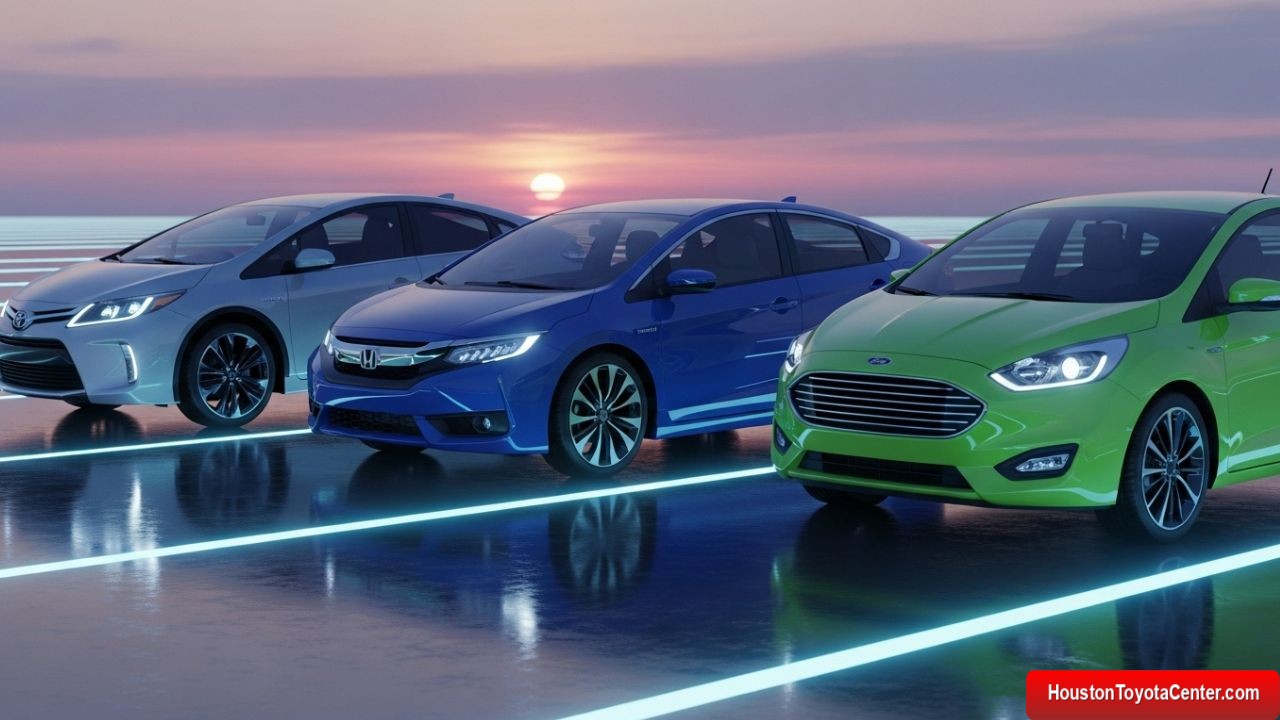
Hybrid technology has transformed the automotive world over the past two decades. Once considered futuristic, hybrid systems are now mainstream, delivering remarkable fuel economy, low emissions, and smooth performance. Among the leading players in this domain, Toyota, Honda, and Ford stand out as pioneers and innovators.
Each brand has taken a different path toward electrification, designing systems that reflect unique philosophies and engineering priorities. But which one offers the best blend of efficiency, reliability, and driving satisfaction? Let’s explore how these three automakers approach hybrid technology — from their systems’ inner workings to their performance on the road.
🌱 1. Understanding Hybrid Technology
Before diving into brand comparisons, it’s important to understand what makes a car “hybrid.”
A hybrid vehicle combines a gasoline engine with one or more electric motors. The motors draw power from a battery pack, which recharges itself through regenerative braking and the internal combustion engine.
FREE: Quickly identify and understand problems with your vehicle 🚘
CLICK HEREThere are several hybrid types:
| Hybrid Type | Description | Example |
|---|---|---|
| Full Hybrid (HEV) | Can run on gas, electricity, or both. Automatically switches between power sources. | Toyota Prius |
| Mild Hybrid (MHEV) | Electric motor assists engine but can’t power the car alone. | Ford Escape MHEV |
| Plug-in Hybrid (PHEV) | Has larger battery, can be charged externally for longer electric-only range. | Honda Clarity Plug-In |
The goal is always to reduce fuel consumption and emissions, while maintaining convenience — no charging anxiety for traditional hybrids.
🚗 2. Toyota: The Hybrid Pioneer
When it comes to hybrid technology, Toyota is the undisputed leader. The company introduced the Prius in 1997, changing the automotive landscape forever. Toyota’s Hybrid Synergy Drive (HSD) remains one of the most efficient and reliable systems ever developed.
⚙️ How Toyota’s Hybrid System Works
Toyota’s HSD uses a power-split device, a planetary gear set that allows seamless power delivery between the gasoline engine, electric motor, and generator. This configuration means the system doesn’t rely on a conventional transmission — instead, it continuously balances engine and motor power for optimal efficiency.
Key features:
- Two motor-generators (MG1 and MG2): One starts the engine and generates power, the other drives the wheels.
- eCVT (electronic continuously variable transmission): Delivers a smooth, gearless driving experience.
- Self-charging system: Regenerative braking converts kinetic energy into electricity.
- Battery options: Modern Toyota hybrids use nickel-metal hydride (NiMH) or lithium-ion batteries depending on the model.
🔋 Toyota Hybrid Lineup
Toyota has extended its hybrid technology across nearly all vehicle categories.
| Model | Type | Fuel Economy (Combined MPG) | Notable Feature |
|---|---|---|---|
| Prius | HEV | 57 MPG | Iconic design, ultra-efficiency |
| RAV4 Hybrid | HEV | 40 MPG | All-wheel drive hybrid SUV |
| Camry Hybrid | HEV | 46 MPG | Sedan comfort with fuel savings |
| Highlander Hybrid | HEV | 36 MPG | Family SUV with space and efficiency |
| RAV4 Prime | PHEV | 94 MPGe | 42-mile electric-only range |
🧩 Driving Experience
Toyota hybrids are known for smooth acceleration and quiet operation, especially at low speeds where the electric motor takes the lead. Some drivers find the CVT feel less engaging, but most appreciate the effortless transition between power sources.
💪 Reliability and Maintenance
Toyota’s hybrid systems are famous for their longevity and reliability. Many Prius owners report crossing 200,000 miles with minimal battery degradation. Toyota also offers long battery warranties, often up to 10 years or 150,000 miles in the U.S.
🌀 3. Honda: Efficiency with a Sporty Edge
Honda entered the hybrid market soon after Toyota, with the Insight in 1999. While its early systems lagged behind Toyota’s in sophistication, Honda’s modern two-motor hybrid system — known as e:HEV — has significantly evolved.
⚙️ How Honda’s Hybrid System Works
Honda’s approach differs from Toyota’s power-split architecture. Instead, the system prioritizes simplicity and direct power delivery.
- EV Drive: The electric motor powers the car at low speeds or light loads.
- Hybrid Drive: The gas engine generates electricity for the motor via a generator.
- Engine Drive: At highway speeds, a clutch connects the gas engine directly to the wheels for efficiency.
Unlike Toyota’s planetary gear setup, Honda uses fixed-gear ratios and intelligent electronic control to switch between modes seamlessly.
🔋 Honda Hybrid Lineup
| Model | Type | Fuel Economy (Combined MPG) | Notable Feature |
|---|---|---|---|
| Accord Hybrid | HEV | 47 MPG | Balanced performance and comfort |
| CR-V Hybrid | HEV | 40 MPG | AWD capability and strong torque |
| Civic Hybrid (2024) | HEV | 50 MPG | Compact efficiency meets sportiness |
| Clarity Plug-In Hybrid | PHEV | 110 MPGe | 48-mile electric range |
| Insight (discontinued) | HEV | 52 MPG | Sleek sedan efficiency |
🧠 Driving Experience
Honda hybrids deliver a sportier feel than Toyota’s, thanks to higher torque and direct engine engagement at cruising speeds. The system favors smooth yet responsive acceleration, and regenerative braking feels natural.
🧩 Reliability and Maintenance
Honda’s hybrid systems are known for durability and low maintenance costs, though historically not quite as proven as Toyota’s. The latest generation has narrowed that gap significantly. Honda batteries also carry warranties similar to Toyota’s, giving consumers peace of mind.
⚡ 4. Ford: American Hybrid Innovation
Ford entered the hybrid race in the early 2000s, licensing some technology from Toyota for its first-generation Escape Hybrid. Since then, Ford has developed its own PowerSplit hybrid system, and later expanded into plug-in and full hybrid models with advanced performance options.
⚙️ How Ford’s Hybrid System Works
Ford’s PowerSplit system functions similarly to Toyota’s — using a planetary gearset to balance power between the gas engine and electric motors. However, Ford tunes its hybrids for stronger acceleration and towing capacity, catering to American driving habits.
Ford’s more recent PowerBoost hybrid in trucks combines turbocharged engines with electric assist for both efficiency and high performance.
🔋 Ford Hybrid Lineup
| Model | Type | Fuel Economy (Combined MPG) | Notable Feature |
|---|---|---|---|
| Escape Hybrid | HEV | 41 MPG | Compact SUV with strong versatility |
| Explorer Hybrid | HEV | 27 MPG | Family SUV with 5,000-lb towing capacity |
| Maverick Hybrid | HEV | 37 MPG | Affordable hybrid pickup truck |
| F-150 PowerBoost | HEV | 25 MPG | Full-size truck with 430 hp |
| Escape Plug-In Hybrid | PHEV | 105 MPGe | 37-mile electric range |
💥 Driving Experience
Ford hybrids often feel more powerful and engaging than their Japanese counterparts. The electric assist provides instant torque, while the gas engine ensures strong highway performance. Their hybrids also excel in towing and utility, areas where Toyota and Honda hybrids are less competitive.
🔧 Reliability and Maintenance
Ford hybrids have improved dramatically in reliability, though Toyota still maintains a slight lead in long-term dependability. Ford’s hybrid batteries are covered by 8-year/100,000-mile warranties, and newer lithium-ion packs are more compact and durable.
🔍 5. Head-to-Head Comparison: Toyota vs. Honda vs. Ford
Let’s summarize how these three automakers stack up in key areas:
| Feature | Toyota | Honda | Ford |
|---|---|---|---|
| Hybrid Architecture | Power-split (planetary gearset) | Dual-motor series-parallel | Power-split (similar to Toyota) |
| Driving Feel | Smooth, quiet, relaxed | Sporty, responsive | Strong, torque-focused |
| Fuel Efficiency | Excellent (up to 57 MPG) | Very good (up to 50 MPG) | Good (up to 41 MPG) |
| Performance Options | RAV4 Prime (302 hp) | CR-V Hybrid (204 hp) | F-150 PowerBoost (430 hp) |
| Battery Technology | NiMH/Li-ion | Li-ion | Li-ion |
| Reliability | Legendary | Excellent | Improved |
| Innovation Level | Pioneer and consistent leader | Adaptive and sporty | Performance-oriented |
| Price Range | $27K–$45K | $28K–$45K | $25K–$70K |
⚙️ 6. The Philosophy Behind Each Brand
🧘 Toyota: “Efficiency First”
Toyota’s hybrid philosophy centers on dependability, economy, and simplicity. The HSD is a marvel of engineering efficiency, prioritizing fuel savings and low emissions over raw excitement. It’s the best choice for long-term value and worry-free ownership.
🚀 Honda: “Balanced Performance”
Honda aims for a middle ground — performance meets efficiency. Their hybrid vehicles feel more engaging to drive, appealing to those who enjoy a spirited ride but still want eco-conscious performance.
🦅 Ford: “Power Meets Purpose”
Ford approaches hybrids as tools for real-world capability. The Maverick and F-150 hybrids show that electrification can enhance trucks and SUVs without compromising strength. Ford’s strategy resonates with North American drivers seeking both efficiency and practicality.
🧭 7. Real-World Ownership Costs
Owning a hybrid isn’t just about fuel savings. Maintenance, repair, and resale value all play crucial roles.
| Brand | Average Maintenance Cost (10 Years) | Battery Warranty | Resale Value (After 5 Years) |
|---|---|---|---|
| Toyota | ~$4,500 | 10 yr / 150,000 mi | Excellent |
| Honda | ~$5,000 | 8 yr / 100,000 mi | Very Good |
| Ford | ~$5,500 | 8 yr / 100,000 mi | Good |
Toyota continues to dominate in total cost of ownership, thanks to proven reliability and strong resale value. Honda is close behind, while Ford’s hybrids appeal more to buyers who prioritize performance and capability over long-term cost efficiency.
⚡ 8. Future Outlook: The Road Ahead
As the automotive world transitions toward full electrification, hybrids remain a crucial bridge. Each brand is evolving its hybrid technology to meet stricter emission standards and consumer expectations.
🔸 Toyota
Toyota is expanding its hybrid lineup aggressively and developing solid-state batteries for next-generation hybrids and EVs. It continues to refine HSD for maximum efficiency.
🔸 Honda
Honda plans to electrify its core models (like Accord and CR-V) using e:HEV systems while partnering with General Motors for new EV platforms.
🔸 Ford
Ford is merging hybrid and EV strategies, offering hybrid powertrains across trucks and SUVs while pushing into full EVs like the Mustang Mach-E and F-150 Lightning.
🌍 9. Environmental Impact and Sustainability
Hybrid vehicles significantly reduce CO₂ emissions compared to conventional cars. However, the environmental benefit varies depending on driving habits and source of electricity (for PHEVs).
| Brand | Average CO₂ Reduction vs. Gas Model | Notable Eco Initiative |
|---|---|---|
| Toyota | 35–45% | Carbon-neutral factories, battery recycling |
| Honda | 30–40% | Green Path manufacturing program |
| Ford | 25–35% | Renewable energy manufacturing goals |
Toyota leads sustainability efforts with global-scale battery recycling and renewable manufacturing systems.
🏁 10. Verdict: Which Hybrid System Is Best?
Choosing between Toyota, Honda, and Ford depends on your priorities:
- 🌿 If you want ultimate efficiency and reliability → Toyota
- 🏎️ If you prefer a sportier, more engaging drive → Honda
- 💪 If you need power, towing, and versatility → Ford
Each brand brings something exceptional to the hybrid landscape. Toyota remains the benchmark for proven efficiency, Honda blends driving fun with eco-consciousness, and Ford redefines what hybrid power can achieve.
In the end, the best hybrid isn’t just about miles per gallon — it’s about how seamlessly technology fits into your life. Whether you’re gliding silently through city streets in a Toyota Prius, enjoying spirited drives in a Honda Accord Hybrid, or towing with confidence in a Ford F-150 PowerBoost, the future of hybrid mobility has never looked brighter. 🌎⚡
📊 Summary Table
| Category | Winner | Reason |
|---|---|---|
| Fuel Efficiency | Toyota | Best-in-class MPG and proven system |
| Driving Dynamics | Honda | Engaging and responsive |
| Performance & Utility | Ford | Power and versatility in hybrids |
| Reliability | Toyota | Unmatched long-term durability |
| Innovation | Toyota | Continuous improvement and leadership |
| Affordability | Ford | Maverick offers hybrid tech at low cost |
| Environmental Focus | Toyota | Leading sustainability practices |
✨ Final Thoughts
Hybrid technology represents the best of both worlds: the efficiency of electric power and the freedom of gasoline engines. Toyota, Honda, and Ford have each built their own identity in this evolving landscape — one rooted in innovation, trust, and adaptability.
As we look to the next decade, these brands will continue refining their systems, ensuring that hybrids remain an essential step toward a cleaner, smarter, and more sustainable future. 🌍💚
Leave a Reply