
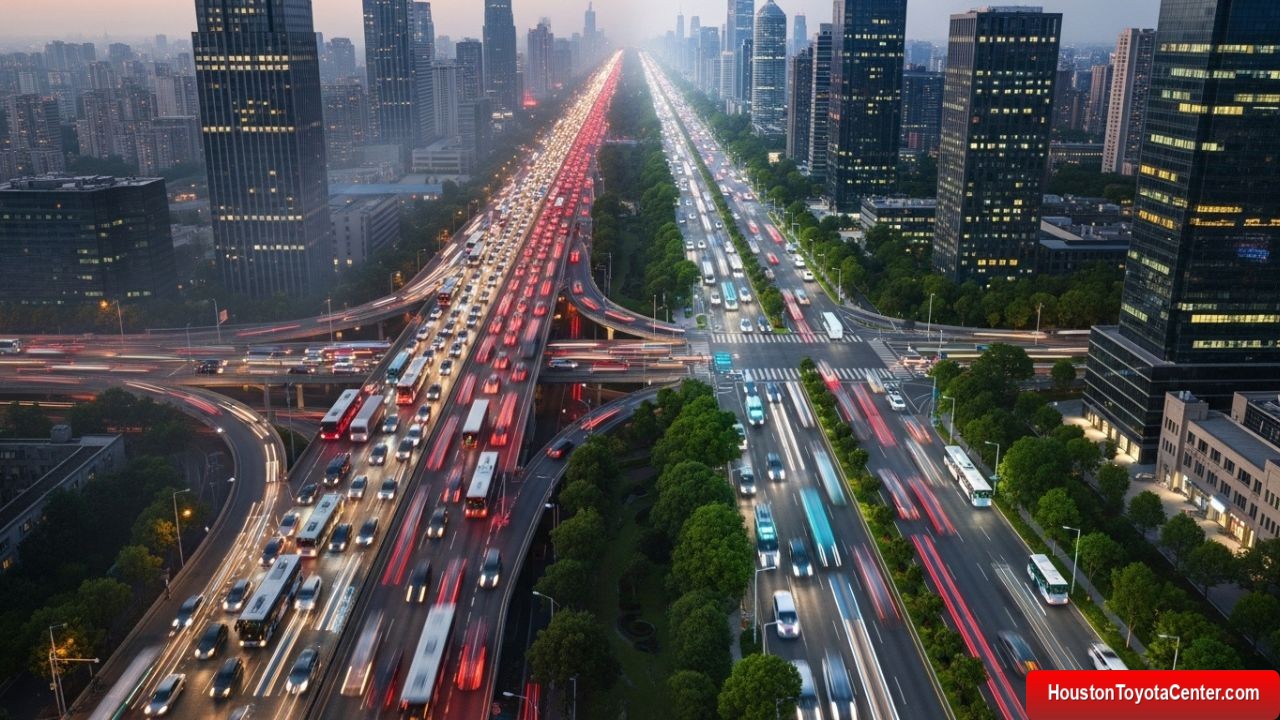
Urban mobility is facing a crisis that is both visible and measurable. Cities around the world are experiencing unprecedented levels of traffic congestion, air pollution, and greenhouse gas emissions. According to multiple international transport studies, the average private car spends more than 90% of its lifetime parked, yet it occupies valuable urban space, consumes energy, and contributes to environmental degradation even when rarely used. At the same time, global urban populations continue to grow, intensifying the demand for efficient, affordable, and sustainable transportation solutions.
Car sharing and ride-pooling have emerged as two of the most promising strategies to address these challenges. By maximizing vehicle utilization and reducing the number of single-occupancy trips, these mobility models aim to transform how people move within cities. They challenge the long-standing assumption that personal car ownership is essential for convenience and freedom, replacing it with flexible, on-demand access to transportation.
This article explores in depth how car sharing and ride-pooling contribute to reducing congestion and emissions. It examines their economic, social, and environmental impacts, the technologies that enable them, the behavioral shifts required for their success, and the policies that can accelerate their adoption. While not a silver bullet, these systems represent a critical piece of the broader transition toward sustainable urban mobility.
Understanding Car Sharing and Ride-Pooling
What Is Car Sharing?
Car sharing refers to services that allow users to access a vehicle for short periods without owning it. Users typically pay by the minute, hour, or day, covering costs such as fuel, insurance, and maintenance. Vehicles are distributed across urban areas and accessed through mobile applications.
FREE: Quickly identify and understand problems with your vehicle 🚘
CLICK HEREThere are several major car sharing models:
- Station-based car sharing: Vehicles must be picked up and returned to designated locations.
- Free-floating car sharing: Vehicles can be parked anywhere within a defined service area.
- Peer-to-peer car sharing: Private car owners rent out their vehicles through a digital platform.
Each model offers different advantages depending on urban density, user behavior, and regulatory frameworks.
What Is Ride-Pooling?
Ride-pooling is a form of shared mobility where multiple passengers traveling in similar directions share a single vehicle. Unlike traditional carpooling, ride-pooling is typically coordinated in real time using algorithms that match riders based on location, destination, and timing.
Ride-pooling differs from ride-hailing in a key way: ride-hailing usually serves one passenger or group at a time, while ride-pooling intentionally combines trips to maximize vehicle occupancy.
The Root Problem: Congestion and Emissions
Urban Congestion Explained
Traffic congestion occurs when the demand for road space exceeds capacity. In most cities, congestion is driven primarily by private vehicles carrying only one occupant. The result is longer travel times, unreliable commutes, and significant economic losses due to wasted productivity.
Congestion has cascading effects:
- Increased fuel consumption
- Higher stress levels for commuters
- Delays in emergency services
- Reduced quality of life
Transportation Emissions
Transportation is one of the largest contributors to global greenhouse gas emissions. Road transport accounts for a significant portion of urban air pollution, releasing carbon dioxide (CO₂), nitrogen oxides (NOx), and particulate matter.
Private vehicles are a major culprit because:
- They are often underutilized
- Many rely on internal combustion engines
- They encourage urban sprawl and longer travel distances
Reducing the number of vehicles on the road is one of the most effective ways to cut emissions quickly.
How Car Sharing Reduces Congestion
Fewer Cars, More Efficiency
One shared vehicle can replace multiple privately owned cars. Studies in various cities have found that a single car-sharing vehicle can substitute between 5 and 15 private cars. This reduction happens because users no longer feel the need to own a car when access is reliable.
With fewer cars:
- Parking demand decreases
- Road space is freed up
- Traffic flow improves
Behavioral Changes
Car sharing encourages users to think more carefully about when and why they drive. Unlike owning a car, where the marginal cost of each trip feels low, car sharing makes each trip a conscious decision.
This leads to:
- Fewer unnecessary trips
- Increased use of public transport, cycling, and walking
- Greater awareness of travel costs and environmental impact
How Ride-Pooling Reduces Congestion
Higher Vehicle Occupancy
The fundamental advantage of ride-pooling is that it increases the average number of passengers per vehicle. Even a small increase in occupancy can have a dramatic effect on congestion.
For example:
- Increasing average occupancy from 1.2 to 1.6 passengers per car can significantly reduce traffic volumes.
- Fewer vehicles are needed to move the same number of people.
Dynamic Routing and Optimization
Modern ride-pooling relies on sophisticated algorithms that:
- Match riders efficiently
- Optimize routes in real time
- Minimize detours and delays
This optimization reduces redundant trips and ensures that vehicles are used as efficiently as possible.
Environmental Benefits of Car Sharing
Reduced Emissions Per Capita
Car sharing leads to lower emissions in several ways:
- Fewer cars are manufactured, reducing embodied emissions.
- Shared fleets often use newer, more efficient vehicles.
- Many services prioritize hybrid or electric vehicles.
Encouragement of Cleaner Technologies
Car-sharing operators are more likely than individual owners to adopt electric vehicles because:
- They can amortize higher upfront costs.
- They benefit from lower operating expenses.
- They respond to regulatory incentives and public expectations.
Environmental Benefits of Ride-Pooling
Lower Emissions Per Trip
By combining trips, ride-pooling reduces emissions per passenger-kilometer. When one vehicle replaces two or three separate trips, fuel consumption and emissions decrease accordingly.
Reduced Urban Air Pollution
Fewer vehicles mean:
- Less idling
- Lower concentrations of harmful pollutants
- Improved public health outcomes, particularly in dense urban areas
Comparative Impact Overview
| Aspect | Private Car Ownership | Car Sharing | Ride-Pooling |
|---|---|---|---|
| Average occupancy | Very low | Moderate | High |
| Vehicle utilization | Low | High | Very high |
| Emissions per capita | High | Lower | Lowest |
| Parking demand | Very high | Reduced | Minimal |
| Behavioral shift | None | Moderate | High |
Economic Implications
Cost Savings for Users
Car sharing and ride-pooling reduce costs by eliminating:
- Purchase price
- Insurance
- Maintenance
- Parking fees
Users pay only when they need transportation, which is particularly attractive for urban residents who drive infrequently.
Reduced Public Infrastructure Costs
Cities benefit from:
- Lower demand for parking structures
- Reduced road expansion needs
- More efficient use of existing infrastructure
Social Equity and Accessibility
Mobility for Non-Car Owners
Shared mobility improves access for:
- Low-income households
- Elderly residents
- Young people without driving licenses
When implemented correctly, these services can reduce transportation inequality.
Potential Equity Challenges
However, there are risks:
- Services may concentrate in affluent areas
- Digital access barriers may exclude some users
- Pricing models may disadvantage certain groups
Policy intervention is often needed to ensure equitable distribution.
Integration with Public Transportation
Car sharing and ride-pooling are most effective when they complement, rather than compete with, public transport.
They can:
- Solve first-mile and last-mile problems
- Reduce the need for private cars in transit-rich areas
- Extend the reach of public transport networks
Policy and Regulation
Supportive Policies
Governments can encourage shared mobility through:
- Dedicated parking spaces
- Reduced fees for shared vehicles
- Access to restricted urban zones
- Incentives for electric shared fleets
Regulatory Balance
Regulation must ensure:
- Fair competition
- Worker protections
- Data transparency
- Safety and reliability
Overregulation can stifle innovation, while underregulation can create negative externalities.
Technological Enablers
Digital Platforms
Mobile applications enable:
- Real-time booking
- Vehicle tracking
- Seamless payments
- User feedback systems
Artificial Intelligence and Data Analytics
AI improves:
- Demand prediction
- Route optimization
- Fleet management
- Energy efficiency
Challenges and Limitations
Despite their benefits, shared mobility systems face challenges:
- User reluctance to share rides
- Privacy concerns
- Operational complexity
- Competition with low-cost private car ownership
Cultural norms and habits can be difficult to change.
The Role of Electric Vehicles
The combination of shared mobility and electric vehicles represents a powerful synergy.
Benefits include:
- Zero tailpipe emissions
- Lower operating costs
- Reduced noise pollution
- Improved urban air quality
Shared fleets are ideal early adopters of electric technology.
Future Outlook
As cities continue to grow, the importance of shared mobility will increase. Advances in automation, connectivity, and energy storage will further enhance the efficiency and appeal of car sharing and ride-pooling.
Autonomous vehicles, in particular, could:
- Dramatically reduce costs
- Increase availability
- Further reduce congestion if deployed responsibly
Conclusion
Car sharing and ride-pooling are not merely convenient alternatives to private car ownership; they are essential tools in the fight against congestion and emissions. By increasing vehicle utilization, reducing the number of cars on the road, and encouraging more thoughtful travel behavior, these systems offer tangible environmental, economic, and social benefits.
Their success, however, depends on thoughtful integration with public transport, supportive public policies, equitable access, and continued technological innovation. While challenges remain, the evidence is clear: shared mobility is a critical component of a sustainable urban transportation future.
Leave a Reply