
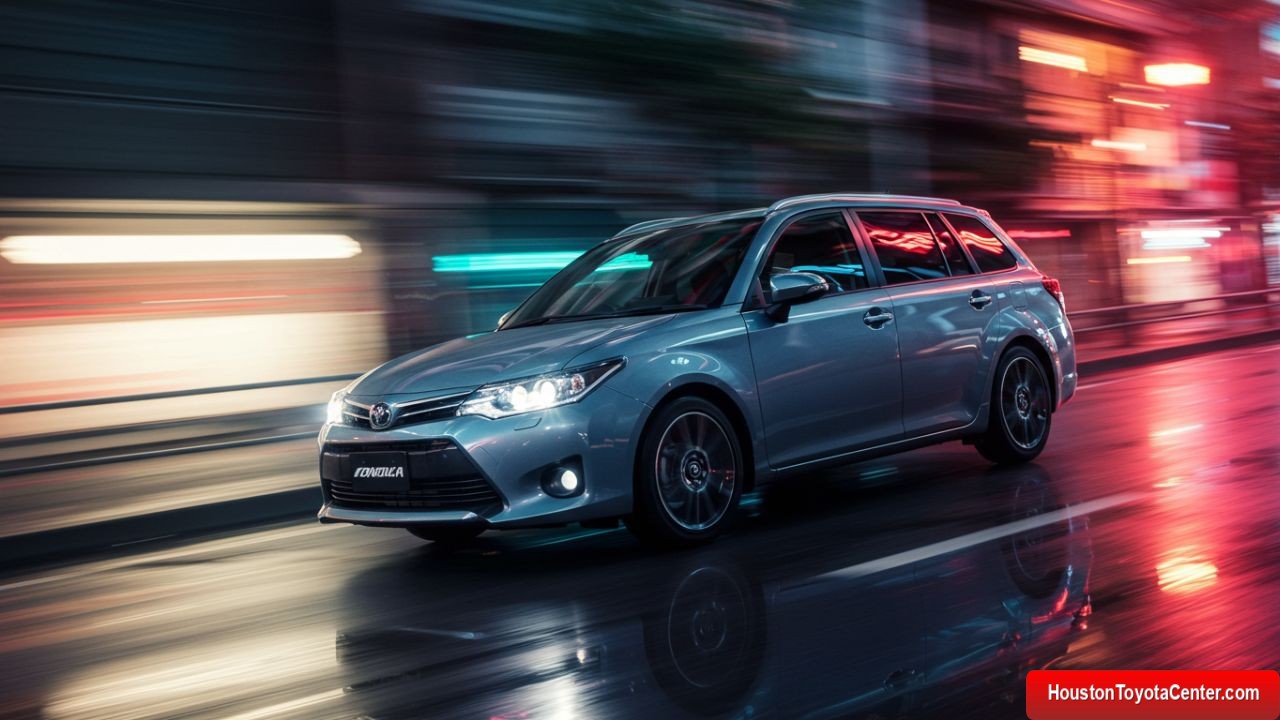
For decades, the Toyota Corolla built its reputation on a simple formula: reliability, efficiency, practicality and affordability. It became one of the world’s most recognizable cars not because it demanded attention, but because it rarely gave owners a reason to complain. The Corolla was the sensible choice, the dependable commuter and, for millions of drivers, the car that simply did its job.
But Toyota eventually realized that dependability alone was no longer enough to make a compact car stand out.
The modern Corolla represents a significant change in that philosophy. Without abandoning the qualities that made the nameplate successful, Toyota has gradually introduced sharper styling, more expressive equipment, sportier driving characteristics and, most dramatically, a genuine performance model in the form of the GR Corolla.
The transformation did not happen overnight. It was the result of a broader change in how Toyota approached vehicle design and performance.
FREE: Quickly identify and understand problems with your vehicle 🚘
CLICK HEREFrom Sensible to Stylish
The turning point can be traced back more than a decade. When Toyota introduced the 2014 Corolla, the company openly described the new generation as more dynamic and dramatically styled. The design featured a longer wheelbase, shorter overhangs, more pronounced wheel arches and a more athletic stance.
Toyota’s objective was not simply to make the Corolla look different. The company said the new design was intended to challenge perceptions of the iconic compact and attract younger buyers.
That strategy became increasingly visible in subsequent generations.
The modern Corolla uses a much more aggressive visual language than many of its predecessors. Sport versions receive larger wheels, sport mesh grilles and more pronounced aerodynamic details. The result is a car that can still function as a practical daily driver while looking considerably less anonymous.
The 2026 Corolla illustrates that approach clearly. Toyota offers different visual treatments across the lineup, with sport grades featuring a gloss-black sport mesh grille, rear sport diffuser and 18-inch graphite-colored alloy wheels.
The distinction matters because Toyota did not completely reinvent the Corolla. Instead, it created different personalities within the same family.
That has become one of the key elements of the Corolla’s transformation.
Giving the Corolla More Personality
The modern Corolla is available in configurations designed to appeal to different types of drivers.
At one end of the range is the traditional Corolla formula, emphasizing efficiency, comfort and everyday usability. At the other are versions that place greater emphasis on appearance and driving engagement.
This approach allows Toyota to preserve the Corolla’s mainstream identity while giving customers more reasons to choose one version over another.
The company has also introduced more sophisticated powertrain technology. In the current U.S. lineup, the Corolla Hybrid combines the familiar compact-car formula with greater fuel efficiency, while gasoline versions receive Toyota’s Dynamic Shift CVT system.
The gasoline Corolla’s transmission is particularly interesting because Toyota designed it to provide a more direct feeling during initial acceleration. A launch gear is used when pulling away before the transmission transitions to the pulley system of the CVT.
Sport-oriented versions also benefit from enhanced Sport mode tuning, while the XSE grade offers paddle shifters with 10 preset ratios.
These changes may sound technical, but their significance is straightforward: Toyota has been working to make the Corolla feel more responsive without sacrificing its everyday character.
The GR Revolution
Then came the bigger change.
Toyota Gazoo Racing, the company’s motorsport and performance division, turned the Corolla into something few people would have expected from the nameplate: a serious hot hatch.
Introduced for the 2023 model year, the GR Corolla was developed as a performance car rather than simply a Corolla with cosmetic upgrades. Toyota equipped it with a 1.6-liter turbocharged three-cylinder engine producing 300 horsepower and 273 pound-feet of torque, paired with the GR-FOUR all-wheel-drive system.
The GR Corolla also brought a six-speed intelligent manual transmission, sport-tuned suspension and performance-focused brakes and tires.
That changed the meaning of the Corolla badge.
Instead of being merely a practical compact car, the Corolla could now occupy a place in the enthusiast world.
The GR Corolla’s design reinforced that transformation. Its body was widened, its fenders were flared and its front end featured functional air ducts. A triple-exhaust system, aggressive grille and prominent spoiler made its purpose obvious.
Toyota emphasized that many of these elements were functional rather than decorative. Airflow management, aerodynamic components and underbody design were developed to improve stability and performance.
In other words, Toyota did not simply make the Corolla look faster.
It engineered a Corolla that was genuinely intended to be driven hard.
Motorsport Becomes Part of the Story
The GR Corolla also demonstrates how Toyota has used motorsport to change the emotional character of its products.
The GR brand is built around the idea of transferring lessons from competition into road cars. The GR Corolla was developed with input from Toyota’s racing program and tested with professional drivers.
That philosophy has continued to evolve.
For 2026, Toyota offers the GR Corolla with 300 horsepower, GR-FOUR all-wheel drive and both six-speed manual and eight-speed automatic transmission options. The car also receives a range of performance-oriented hardware and design details.
Toyota has gone even further with the 2026 GRMN Corolla, a more track-focused derivative developed around additional chassis, aerodynamic and drivetrain improvements.
According to Toyota, the GRMN Corolla was developed through experience in Super Taikyu competition and Nürburgring testing. The company also increased torque and further optimized the all-wheel-drive system.
That is a remarkable evolution for a model name historically associated with practicality.
The Interior Became Part of the Experience
Making the Corolla more exciting was not only about exterior styling or horsepower.
Toyota has also invested in creating a more driver-focused cabin.
Regular Corolla models feature sculpted seats and increasingly sophisticated technology, while sport grades add visual and functional details intended to make the interior feel more purposeful. The GR Corolla takes that concept considerably further with sport seats, GR badging, aluminum pedals and a digital instrument display capable of showing performance-related information such as turbo pressure and all-wheel-drive settings.
This is important because performance is partly psychological.
A car can be mechanically capable, but the driver’s perception of the vehicle also depends on what they see, touch and hear.
The GR Corolla’s interior communicates its purpose before the engine even starts.
Toyota Did Not Abandon the Original Formula
Perhaps the most interesting part of the Corolla’s evolution is what Toyota did not change.
The company did not turn every Corolla into a sports car.
Instead, it created a broader range of personalities around the same name.
The standard Corolla remains focused on the qualities that made the model successful in the first place. Efficiency, practicality, technology and ease of use remain central to the product.
The sportier versions simply add another layer.
This strategy is visible in the 2027 Corolla as Toyota celebrates 60 years of the nameplate. The anniversary model is based on the SE Hybrid grade and adds exclusive 18-inch wheels, special badging and a more distinctive appearance. Toyota describes the Corolla’s six-decade history as a combination of reliability, efficiency and global reach.
The message is clear: the Corolla does not need to abandon its identity to become more interesting.
It can evolve.
Why the Strategy Matters
The automotive market has changed significantly since the Corolla first appeared in Japan in 1966.
Compact cars now compete not only on fuel economy and price, but also on design, technology, connectivity and emotional appeal. Buyers have more choices, and younger consumers may not automatically associate Toyota with excitement.
The Corolla’s transformation addresses that challenge from several directions.
For mainstream buyers, the car offers modern styling and increasingly sophisticated technology.
For customers interested in efficiency, hybrid power adds another dimension to the lineup.
For drivers who want a sportier appearance, the SE and XSE grades provide more aggressive design and equipment.
And for enthusiasts, the GR Corolla provides an entirely different proposition.
That range gives the Corolla a much broader emotional spectrum than it once had.
A Different Kind of Corolla
The most important change is not necessarily the horsepower figure, the grille or the wheels.
It is the idea behind the product.
Toyota has taken one of the automotive industry’s most conservative and recognizable nameplates and allowed it to develop a performance-oriented identity without destroying the qualities that made it successful.
The GR Corolla is the clearest expression of that philosophy. With 300 horsepower, all-wheel drive, a manual transmission option and a chassis engineered for enthusiastic driving, it is far removed from the image of the anonymous commuter car.
At the same time, the standard Corolla has become visually sharper and more engaging. Sport modes, paddle shifters, larger wheels and more aggressive bodywork give everyday versions a stronger personality without turning them into specialized performance machines.
Toyota’s achievement, therefore, is not that it transformed every Corolla into a sports car.
It is that the company expanded what the Corolla could represent.
For one driver, it can still be an economical and dependable commuter. For another, it can be a stylish hybrid. For someone else, it can be a 300-horsepower all-wheel-drive hot hatch capable of going from the daily commute to a racetrack.
That is a significant shift for a car whose greatest strength was once its ability to be almost completely rational.
The Corolla’s evolution shows that practicality and excitement do not necessarily have to be opposites.
Toyota has spent years adding style, technology, hybrid efficiency and increasingly serious performance to one of its most important nameplates. The result is not a rejection of the Corolla’s past, but an expansion of its identity.
After six decades, the Corolla is still doing what it has always done: adapting to what drivers want.
The difference is that today, there is considerably more room for fun.
Leave a Reply