
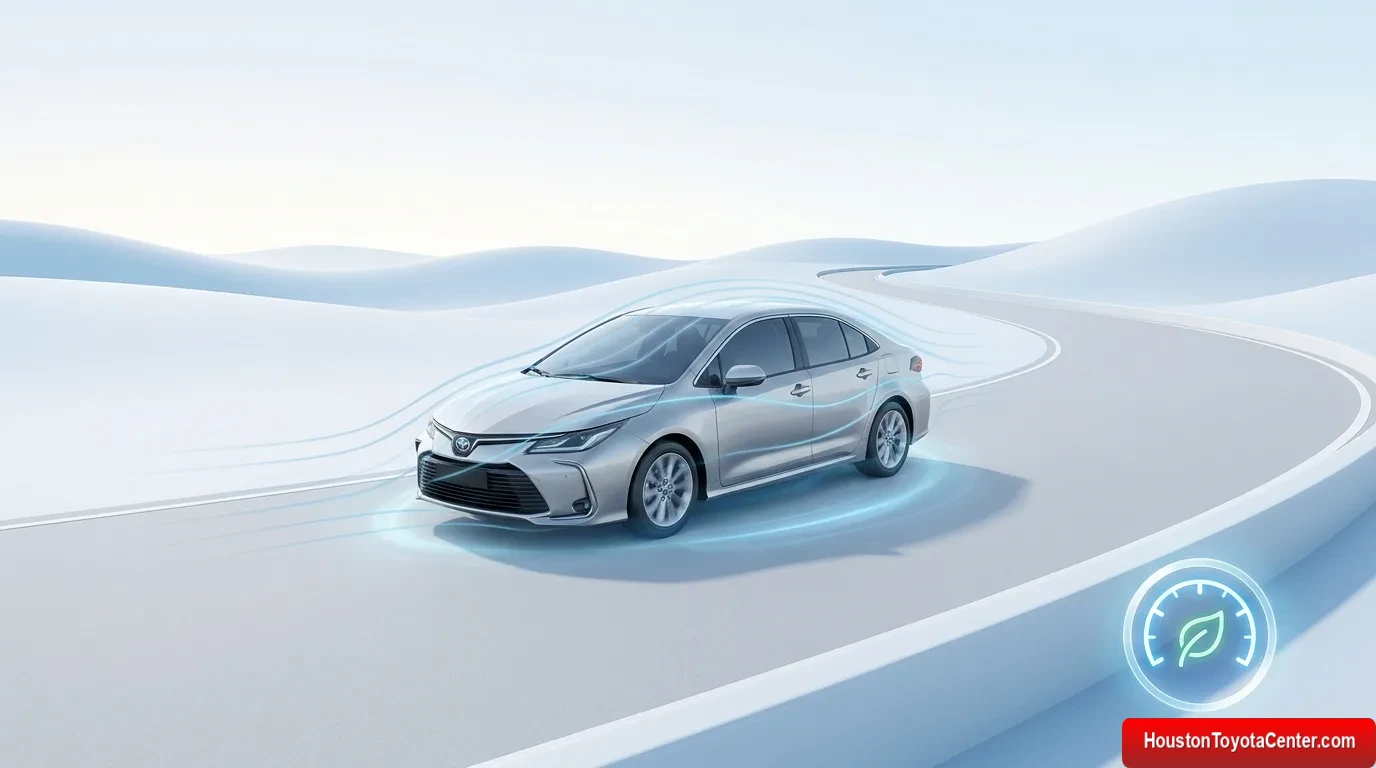
The Toyota Corolla is more than a successful automobile. Since its introduction in 1966, the compact car has become one of the most recognizable vehicles in the history of modern transportation. Its influence extends far beyond sales figures. Across decades of economic change, technological development, urbanization, and shifting consumer preferences, the Corolla has played a significant role in shaping how millions of people around the world move.
The story of the Corolla is closely connected to the transformation of the automobile from a symbol of prosperity into an everyday transportation tool. Its combination of affordability, practicality, relatively compact dimensions, and reputation for durability helped make car ownership accessible to large populations in markets across Asia, Europe, the Americas, Africa, and Oceania.
More than half a century after its debut, the Corolla remains an important part of Toyota’s global strategy and of the broader automotive landscape. Its history also illustrates how a single vehicle platform can adapt to dramatically different markets while maintaining a recognizable identity.
From Japanese Compact Car to Global Vehicle
When Toyota introduced the Corolla in 1966, Japan was experiencing rapid economic growth and increasing demand for personal transportation. The country was developing its industrial base, expanding its road infrastructure, and seeing a growing middle class gain access to consumer goods.
FREE: Quickly identify and understand problems with your vehicle 🚘
CLICK HEREThe Corolla was designed for this emerging environment. It offered dimensions suitable for urban and suburban driving while providing enough interior space and practicality for families. Its relatively simple concept allowed Toyota to produce the vehicle at scale and adapt it to different markets.
The timing was important. During the following decades, automobile ownership expanded rapidly in many parts of the world. Consumers increasingly wanted vehicles that could serve multiple purposes without requiring the size or cost associated with larger automobiles.
The Corolla fit that transition.
As Toyota expanded internationally, production and assembly operations were established in multiple countries. Local manufacturing reduced logistical costs, supported regional employment, and allowed the company to adapt vehicles to local regulations and consumer expectations.
This international production strategy helped transform the Corolla from a Japanese model into a genuinely global automobile.
A Symbol of Mass Mobility
The impact of the Corolla can be understood through the concept of mass mobility. In many countries, owning a car represented an important step toward personal independence.
For workers, a reliable compact car could make commuting easier. For families, it could provide access to schools, shopping centers, medical facilities, and recreational activities. In areas where public transportation was limited, the automobile could become an essential part of daily life.
The Corolla was particularly well positioned for this role because it was designed around practical transportation rather than a specialized driving experience.
Its compact format made it suitable for crowded urban environments, while its four-door configurations and later body styles increased its usefulness for families and businesses. Over time, the model was offered in different configurations, including sedans, hatchbacks, wagons, and other derivatives depending on the market.
That flexibility allowed the Corolla nameplate to remain relevant as transportation needs changed.
Manufacturing on a Global Scale
One of the Corolla’s most significant contributions to global transportation is connected to manufacturing rather than the vehicle itself.
Toyota became internationally recognized for its production philosophy, including principles associated with the Toyota Production System. Concepts such as just-in-time production, continuous improvement, standardized processes, and attention to quality became influential far beyond Toyota’s own factories.
The Corolla became one of the products through which these manufacturing methods were applied on an enormous scale.
Global production required coordination between suppliers, factories, engineers, logistics companies, and dealers. Components could be produced in different regions and assembled closer to their final markets. This approach contributed to the development of increasingly interconnected automotive supply chains.
The Corolla therefore represents more than an individual consumer product. It is also part of the evolution of global industrial production.
Reliability and the Economics of Ownership
A vehicle’s impact on transportation is not determined only by its purchase price. The total cost of ownership can influence whether a car remains practical for a household over many years.
Fuel consumption, maintenance requirements, parts availability, insurance costs, resale value, and durability all affect that calculation.
The Corolla developed a strong reputation for reliability among consumers and automotive professionals. Although individual experiences vary by generation, market, maintenance history, and driving conditions, the model’s long production history contributed to widespread familiarity with its mechanical systems.
This familiarity also supported a large ecosystem of mechanics, parts suppliers, dealerships, and independent repair businesses.
In many markets, the Corolla became a vehicle that could be maintained for years rather than replaced quickly. That characteristic helped reinforce its role as practical transportation for households with different income levels.
The Corolla and Urban Transportation
The global expansion of private automobile ownership has had complex consequences for cities.
Cars provide flexibility and can connect residential areas with workplaces, commercial districts, schools, and services. At the same time, large-scale dependence on private vehicles can contribute to congestion, road construction demands, parking requirements, energy consumption, and emissions.
The Corolla occupies an interesting position within this debate because its compact dimensions and relatively modest size distinguish it from larger passenger vehicles.
For decades, compact cars represented an important alternative to increasingly large automobiles, particularly in densely populated cities and countries where fuel costs and road space were significant considerations.
The Corolla did not solve the broader challenges associated with car-dependent transportation. No single vehicle could. However, its popularity demonstrated the continuing global demand for relatively efficient, practical passenger vehicles.
Adapting to Changing Consumer Expectations
The automotive industry has changed considerably since 1966. Consumers today expect technologies that were not even imagined when the first Corolla appeared.
Safety systems, electronic controls, infotainment, connectivity, driver assistance technologies, and increasingly sophisticated powertrains have transformed the modern automobile.
The Corolla has evolved alongside these changes.
Different generations introduced new safety features, improved fuel efficiency, updated engines, redesigned interiors, and increasingly advanced electronic systems. In some markets, Toyota has also incorporated hybrid technology into the Corolla lineup.
This transition reflects a broader transformation within the automotive industry. Manufacturers are under pressure to improve efficiency while meeting increasingly demanding environmental regulations and consumer expectations.
The Corolla’s continued development demonstrates how a long-running model can be repeatedly updated without abandoning its basic role as practical transportation.
Hybrid Technology and the Changing Automobile
The emergence of hybrid vehicles has created another chapter in the Corolla’s history.
Toyota became one of the major manufacturers associated with hybrid technology through models such as the Prius. Hybrid systems subsequently expanded into other vehicles, including Corolla variants in selected markets.
The underlying concept is straightforward. A hybrid powertrain combines an internal combustion engine with electric propulsion and a battery system. Depending on the driving conditions, the vehicle can use different combinations of these components to improve efficiency.
For consumers, hybrid Corollas have provided another option between conventional gasoline vehicles and fully electric cars.
This is particularly relevant in markets where charging infrastructure for battery electric vehicles remains uneven or where consumers are not ready to transition entirely away from internal combustion engines.
The Corolla’s adoption of hybrid technology illustrates a broader trend in transportation: electrification does not necessarily happen through a single technological path.
A Global Platform With Local Characteristics
One of the reasons for the Corolla’s longevity has been its ability to take different forms in different markets.
Automobile buyers do not have identical needs around the world. Climate, road conditions, fuel prices, taxation, regulations, family structures, income levels, and cultural preferences can all influence vehicle choices.
Toyota has adapted Corolla products to these conditions over the years.
In some markets, the sedan has remained particularly important. In others, hatchbacks or related compact models have played a larger role. Equipment levels and powertrain options have also varied.
This localization strategy reflects a central reality of global transportation: a successful international vehicle cannot simply be designed for one country and exported unchanged to every other market.
It must accommodate differences while maintaining economies of scale.
The Corolla’s Role in Developing Markets
The Corolla has also been important in countries where vehicle ownership expanded alongside economic development.
As incomes increased and road networks improved, demand for affordable private transportation often grew. A vehicle with a reputation for durability and relatively straightforward maintenance could become attractive to first-time buyers.
Used Corollas also became part of this process. Vehicles often remain in circulation after their first owner sells them, creating a secondary market that can make private transportation accessible to additional households.
In this sense, the influence of the Corolla extends beyond new-car sales. Its long-term presence on roads contributes to transportation networks through the used-vehicle market.
More Than a Sales Success
The Corolla is frequently discussed because of its enormous sales history, but focusing only on sales numbers misses part of the story.
Its larger significance lies in what those numbers represent.
Millions of individual transportation decisions have involved a Corolla. Families have used them for everyday commuting. Businesses have relied on them for mobility. Rental companies have operated fleets of them. Driving schools, government agencies, and commercial operators in various countries have also used Corolla models or closely related Toyota vehicles.
Each individual car is relatively ordinary. Collectively, however, these vehicles form part of a massive global transportation network.
That is one of the defining characteristics of successful mass-market products. Their influence comes not from being extraordinary objects but from becoming familiar objects used repeatedly by large populations.
Environmental Questions and the Future
The Corolla’s history also raises questions about the environmental future of personal transportation.
Internal combustion vehicles have contributed to greenhouse gas emissions and local air pollution, while the global expansion of private vehicle ownership has increased demand for roads, fuel, parking, and other infrastructure.
At the same time, automobiles continue to provide essential mobility for billions of people.
The challenge facing manufacturers is therefore not simply to produce more vehicles. It is to develop transportation technologies that can provide mobility while reducing environmental impacts.
Electrification, hybrid systems, improved manufacturing efficiency, lightweight materials, alternative fuels, and advances in battery technology are all part of this transition.
The Corolla is positioned within that transformation because its long-running platform has repeatedly adapted to new technological and regulatory environments.
An Enduring Transportation Legacy
Few automobile models have remained relevant across as many decades and markets as the Toyota Corolla.
Its influence comes from a combination of factors: global manufacturing, practical design, broad availability, adaptability, and a strong presence in both new and used vehicle markets.
The Corolla did not create mass automobile ownership, and it did not single-handedly transform global transportation. Its importance is better understood as part of a much larger historical process.
The automobile became increasingly accessible. Manufacturing became increasingly global. Road networks expanded. Middle classes grew. Urban regions spread outward. Consumer expectations changed. Environmental regulations became more demanding. Through each of these transitions, the Corolla evolved with the market.
That adaptability may be its most important legacy.
The history of the Corolla is ultimately a history of ordinary mobility on an extraordinary scale. It shows how transportation can be shaped not only by revolutionary technologies, but also by products that quietly become dependable parts of everyday life.
From Japanese roads in the 1960s to cities and highways around the world today, the Corolla has been part of the infrastructure of modern personal mobility. Its story reflects the globalization of the automotive industry and the continuing demand for accessible, practical transportation.
As the industry moves toward electrification, connected vehicles, and new forms of mobility, the Corolla’s next chapter will depend on how successfully its familiar concept can adapt once again.
Its greatest impact may therefore not be what the Corolla was, but what its long history demonstrates: global transportation changes gradually, through technologies, industries, and vehicles that become integrated into everyday life.
Leave a Reply