
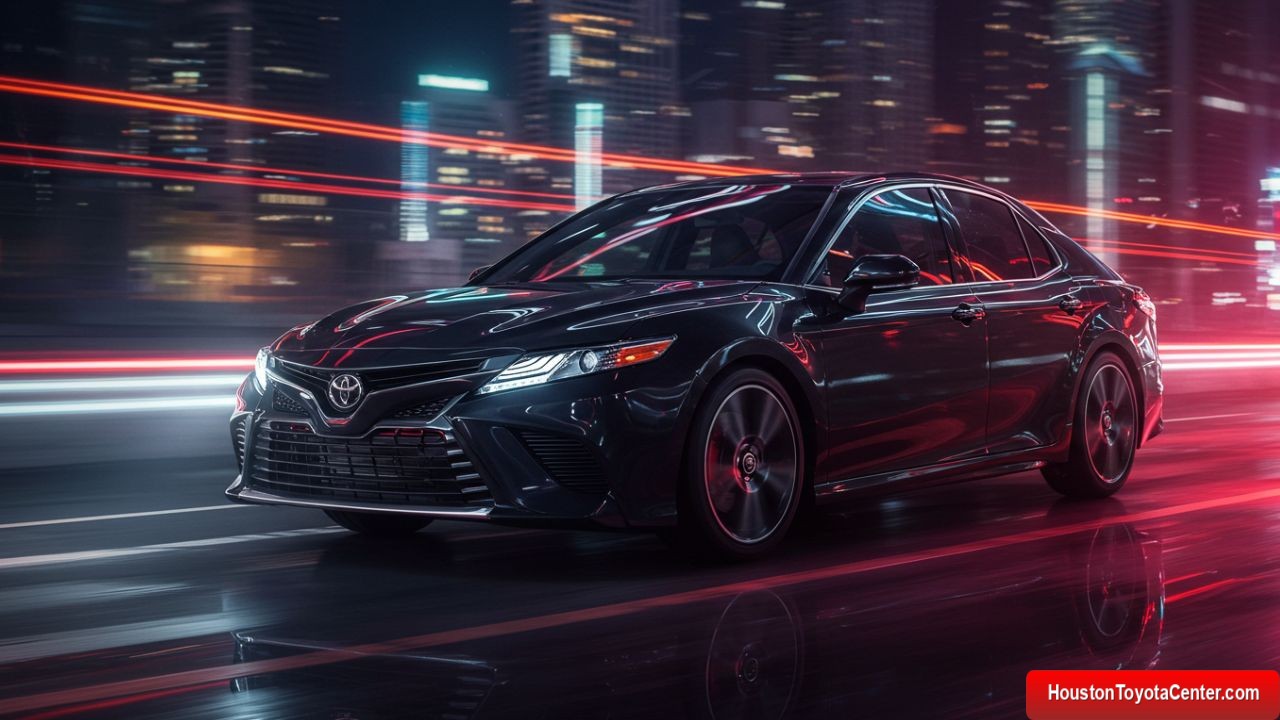
When Toyota introduced the first-generation Camry in 1982, few could have predicted that this modest midsize sedan would evolve into one of the most enduring and successful automotive names in history. Over four decades, the Camry has transcended its utilitarian roots to become a cultural icon—a symbol of reliability, practicality, and quiet excellence. From suburban driveways in America to bustling city streets in Japan, from taxi fleets in Southeast Asia to family road trips across Europe, the Camry has earned a reputation as the quintessential “everyman’s car.” But how did it achieve such universal appeal? What transformed a simple compact sedan into a global phenomenon embraced by multiple generations?
The story of the Camry is not just about engineering or marketing—it’s a narrative woven through shifting consumer values, economic trends, technological innovation, and cross-cultural adaptation. It reflects Toyota’s deep understanding of what people truly want in a vehicle: dependability, comfort, value, and peace of mind. This article explores the evolution of the Camry across generations, examining how each model year contributed to its growing legacy, how it adapted to changing markets, and why it continues to resonate with drivers worldwide.
The Birth of a Legend: First Generation (1982–1986)
Toyota launched the Camry—whose name derives from the Japanese word kanmuri, meaning “crown”—as a front-wheel-drive compact sedan designed for international appeal. At the time, Toyota already had success with models like the Corolla and Celica, but there was a gap in their lineup for a larger, more refined offering that could compete with European and American sedans without sacrificing fuel efficiency or reliability.
The first-gen Camry (known internally as the V10 series) debuted in Japan in March 1982. Initially sold at Toyota Vista Store locations, it was positioned between the Corolla and the larger Crown. Its design was conservative yet modern for its era—clean lines, a boxy silhouette, and an emphasis on interior space thanks to its transverse engine layout and compact drivetrain.
FREE: Quickly identify and understand problems with your vehicle 🚘
CLICK HERE| First-Generation Camry (V10 Series) | |
|---|---|
| Production Years | 1982–1986 |
| Body Styles | 4-door sedan, 5-door liftback |
| Engine Options | 1.8L I4 (1S), 2.0L I4 (2S) |
| Transmission | 5-speed manual, 3/4-speed automatic |
| Wheelbase | 93.7 inches |
| Key Features | Independent suspension, aerodynamic styling |
What set the early Camry apart wasn’t raw power or luxury finishes—it was thoughtful engineering. Toyota focused on ride quality, cabin quietness, and mechanical durability. These attributes resonated particularly well in export markets, especially North America, where consumers were beginning to favor smaller, more efficient vehicles in the aftermath of the oil crises of the 1970s.
By 1983, the Camry arrived in the United States, initially imported from Japan. Sales started slowly, but positive reviews from automotive journalists praising its smooth ride and low maintenance needs helped build momentum. By the end of its production run in 1986, over 600,000 units had been produced—an impressive figure for a new model line.
Crucially, the first generation laid the foundation for what would become the Camry’s core identity: a no-nonsense, dependable car built for real-world use. There were no flashy gimmicks, no attempts at sportiness or extravagance. Instead, Toyota offered something increasingly rare: consistency.
Refinement and Expansion: Second Generation (1987–1991)
With the second generation (XV10 series), Toyota took a bold step forward—not only refining the Camry’s design and performance but also expanding its reach globally. Introduced in late 1986 for the 1987 model year, this version marked a significant departure from its predecessor, both in size and ambition.
One of the most important developments during this period was the decision to begin manufacturing the Camry in the United States. In May 1988, Toyota opened its Georgetown, Kentucky plant—the first full-scale passenger vehicle production facility operated by a Japanese automaker in the U.S. This move was revolutionary. It signaled Toyota’s long-term commitment to the American market and helped alleviate trade tensions over Japanese imports.
The XV10 series grew substantially—now classified as a midsize sedan rather than compact. With a longer wheelbase (102.4 inches), improved aerodynamics, and a more spacious interior, the Camry began to rival established American favorites like the Ford Taurus and Honda Accord.
| Second-Generation Camry (XV10 Series) | |
|---|---|
| Production Years | 1987–1991 |
| Body Styles | 4-door sedan, 5-door station wagon |
| Engine Options | 2.0L I4 (3S-FE), 2.5L V6 (introduced in 1989) |
| Transmission | 5-speed manual, 4-speed automatic |
| Wheelbase | 102.4 inches |
| Notable Innovations | First Camry with optional V6 engine; U.S. production begins |
Perhaps the most notable addition was the introduction of the 2.5L V6 engine in 1989—an option previously unheard of in economy-oriented sedans. Paired with a smooth-shifting automatic transmission, the V6 transformed the Camry from a frugal commuter car into a surprisingly capable grand tourer. Critics took notice. Car and Driver praised the V6 model for its “refined power delivery” and “remarkably hushed cabin.”
This generation also saw the debut of the Camry LE (Luxury Edition), which added features like power windows, cruise control, and upgraded upholstery—signaling Toyota’s intent to climb the value ladder while maintaining affordability.
Sales soared. By 1990, the Camry had become the best-selling import nameplate in the United States. More importantly, it began to shift public perception: the Camry was no longer just a reliable car—it was becoming a desirable one.
Global Dominance Begins: Third Generation (1992–1996)
If the second generation elevated the Camry’s status, the third (XV20 series) cemented its dominance. Launched in late 1991 for the 1992 model year, the XV20 represented a quantum leap in design sophistication, safety, and technology.
Gone were the boxy angles of previous models. The XV20 featured rounded contours, integrated bumpers, and a sleeker profile that aligned with 1990s design trends. Inside, the dashboard adopted a driver-focused layout with better ergonomics and higher-quality materials. For the first time, buyers could order a Camry with dual airbags, anti-lock brakes (ABS), and even traction control—features once reserved for luxury brands.
| Third-Generation Camry (XV20 Series) | |
|---|---|
| Production Years | 1992–1996 |
| Body Styles | 4-door sedan, 5-door station wagon |
| Engine Options | 2.2L I4 (5S-FE), 3.0L V6 (1MZ-FE) |
| Transmission | 5-speed manual, 4-speed automatic |
| Wheelbase | 105.1 inches |
| Safety & Tech Highlights | Dual airbags, ABS, traction control, OBD-II system |
Under the hood, the new 3.0L V6 (codenamed 1MZ-FE) delivered 194 horsepower—making it one of the most powerful engines in its class. Combined with a refined suspension tuned for comfort, the Camry now offered a compelling blend of performance and serenity.
But perhaps the most transformative aspect of this generation was its role in shaping Toyota’s reputation for longevity. Mechanics and fleet operators began reporting that Camrys regularly surpassed 200,000 miles with minimal repairs. Taxi companies in cities like New York and Chicago started adopting the Camry en masse due to its low operating costs and high resale value.
Consumer Reports consistently ranked the Camry near the top of its reliability surveys. Word spread: if you wanted a car that would last, buy a Camry.
By 1994, the Camry had overtaken the Honda Accord to become the best-selling car in America—a title it would hold for most of the next three decades. This wasn’t just a victory of sales figures; it was a cultural milestone. The Camry had entered the mainstream consciousness as the default choice for sensible car buyers.
The Apex of Mainstream Appeal: Fourth Generation (1997–2001)
As the world approached the new millennium, the fourth-generation Camry (XV30 series) arrived with a mission: to refine everything that worked and eliminate every weakness. Introduced in late 1996 for the 1997 model year, the XV30 was bigger, quieter, safer, and more luxurious than any Camry before it.
Toyota employed advanced computer-aided design and wind tunnel testing to optimize aerodynamics, resulting in a drag coefficient of just 0.28—exceptionally low for the time. The chassis was stiffened, reducing noise, vibration, and harshness (NVH). Suspension tuning emphasized comfort without sacrificing handling precision.
Inside, the leap was even more dramatic. Soft-touch plastics replaced hard surfaces. Optional leather seats, woodgrain trim, and a premium JBL audio system made the Camry feel like a near-luxury sedan. Rear-seat legroom expanded, making it ideal for families and chauffeur-driven professionals alike.
| Fourth-Generation Camry (XV30 Series) | |
|---|---|
| Production Years | 1997–2001 |
| Body Styles | 4-door sedan |
| Engine Options | 2.2L I4 (5S-FE), 3.0L V6 (1MZ-FE) |
| Transmission | 5-speed manual, 4/5-speed automatic |
| Wheelbase | 107.1 inches |
| Interior & Comfort Features | Dual-zone climate control, memory seats, sunroof |
Technologically, the XV30 introduced several innovations:
- Vehicle Stability Control (VSC) became available in later models.
- An updated OBD-II system improved diagnostics and emissions compliance.
- Enhanced crash structures met stricter U.S. federal safety standards.
Despite these upgrades, Toyota managed to keep prices competitive. A base LE model started around $18,000—well within reach of middle-class families. Even fully loaded XLE V6 versions remained under $25,000.
Marketing played a crucial role during this era. Toyota’s advertising campaigns emphasized themes of trust, family, and peace of mind. Commercials often depicted parents driving kids to school, couples on weekend getaways, or retirees embarking on cross-country adventures—all behind the wheel of a Camry.
These narratives struck a chord. The Camry wasn’t selling horsepower or style; it was selling emotional security. Buyers weren’t choosing a car—they were choosing confidence.
Sales reflected this emotional connection. Annual U.S. sales exceeded 400,000 units by the end of the decade. The Camry became synonymous with sensible ownership, frequently appearing on “recommended” lists from insurance agents, financial advisors, and consumer advocacy groups.
Internationally, the XV30 found success in Australia, Canada, the Middle East, and parts of Latin America. In China, where the auto market was just beginning to expand, the Camry became a status symbol among emerging professionals—proof that success didn’t require ostentation.
Redefining Excellence: Fifth Generation (2002–2006)
The fifth-generation Camry (XV40) arrived at a pivotal moment. The early 2000s saw rising fuel prices, increased competition from Hyundai and Nissan, and changing tastes among younger buyers who associated traditional sedans with boredom. To stay relevant, Toyota needed to make the Camry not just reliable—but exciting.
Enter a radical redesign. Unveiled in 2001 for the 2002 model year, the XV40 adopted a bolder aesthetic language. Sharper headlights, a prominent grille, and sculpted body panels gave the Camry a more assertive presence. While still conservative compared to sports coupes, it was undeniably more dynamic than its predecessors.
More importantly, Toyota invested heavily in platform engineering. The XV40 rode on an all-new unitized body structure with enhanced rigidity and weight distribution. Independent MacPherson strut front and dual-link rear suspensions improved ride quality and cornering stability.
Under the hood, engines received updates for better efficiency and responsiveness:
- The 2.4L I4 (2AZ-FE) produced 157 hp and up to 24 mpg combined.
- The 3.3L V6 (3MZ-FE) delivered 225 hp—making it one of the strongest naturally aspirated six-cylinders in its segment.
| Fifth-Generation Camry (XV40 Series) | |
|---|---|
| Production Years | 2002–2006 |
| Body Styles | 4-door sedan |
| Engine Options | 2.4L I4 (2AZ-FE), 3.3L V6 (3MZ-FE) |
| Transmission | 5-speed manual, 5-speed automatic |
| Wheelbase | 107.9 inches |
| Advanced Features | Bluetooth connectivity, navigation system, backup camera (late models) |
Technology adoption accelerated during this generation. Higher trims included:
- Satellite radio
- GPS navigation
- Bluetooth phone integration
- Backup camera (in 2006 models)
Safety also advanced significantly. Standard dual front airbags were joined by side-impact and curtain airbags across most trims. Electronic Brakeforce Distribution (EBD) and Brake Assist became standard.
But beyond specs, the XV40 succeeded because it balanced evolution with familiarity. It felt modern without alienating loyal customers. Retirees still found it comfortable and easy to drive; young professionals appreciated its tech features and subtle styling cues.
In 2006, Toyota celebrated a historic milestone: the Camry became the best-selling automobile in the United States, surpassing even the Ford F-Series pickup truck in annual sales. While the F-Series reclaimed the crown the following year, the achievement underscored the Camry’s broad-based appeal.
Globally, the XV40 continued to thrive. In Australia, it won the “Car of the Year” award in 2002. In China, local assembly began in Guangzhou through a joint venture with GAC Group, enabling lower prices and faster delivery times.
Yet challenges loomed. SUVs like the Honda CR-V and Toyota’s own RAV4 were gaining popularity. Younger buyers increasingly favored crossovers over sedans. Could the Camry adapt?
Aesthetic Revolution: Sixth Generation (2007–2011)
If the fifth generation hinted at change, the sixth (XV50) embraced transformation. Debuting in 2006 for the 2007 model year, the XV50 shocked many longtime fans with its flamboyant styling—particularly in North America.
Toyota adopted what it called the “Vibrant Clarity” design philosophy: aggressive front grilles, swept-back headlights, and flowing character lines. Some praised the bolder look; others derided it as too flashy for a traditionally staid sedan.
Interior quality improved dramatically. Hard plastics gave way to soft-touch materials, real metal accents, and tighter panel gaps. Noise insulation reached luxury-car levels, aided by acoustic glass and active noise cancellation in higher trims.
Powertrains evolved further:
- The 2.4L I4 now made 169 hp.
- The 3.5L V6 (2GR-FE) generated 268 hp—more than some entry-level sports cars.
Paired with a smooth 6-speed automatic transmission, the V6-powered Camry could accelerate from 0 to 60 mph in under 6 seconds—blurring the line between family sedan and performance coupe.
| Sixth-Generation Camry (XV50 Series) | |
|---|---|
| Production Years | 2007–2011 |
| Body Styles | 4-door sedan |
| Engine Options | 2.4L I4 (2AZ-FE), 3.5L V6 (2GR-FE) |
| Transmission | 5-speed manual, 5/6-speed automatic |
| Wheelbase | 109.8 inches |
| Performance & Efficiency | 0–60 mph in ~5.9 sec (V6); up to 33 mpg highway |
| Driver Assistance | Blind-spot monitoring (optional), adaptive cruise control (late models) |
Fuel economy remained strong despite increased power. The 4-cylinder model achieved up to 33 mpg on the highway, while the V6 still managed 27 mpg—respectable for its output.
Safety systems expanded:
- Standard stability control
- Front and side airbags
- Available pre-collision system (PCS)
- Lane departure warning (LDW)
Toyota also introduced the Camry Hybrid in 2006—the first hybrid variant in the lineup. Built on the same platform as the gasoline model, it paired a 2.4L I4 with an electric motor to deliver 212 total system horsepower and an EPA-estimated 33 mpg city / 34 mpg highway. It was neither the most efficient nor the fastest hybrid, but it appealed to eco-conscious buyers who didn’t want to compromise on space or comfort.
Sales remained robust. The Camry stayed atop the U.S. sales charts, with annual volumes exceeding 400,000 units. However, cracks were starting to show. Consumer feedback revealed polarization over the styling—some loved the drama, others missed the understated elegance of earlier models.
Still, Toyota stood firm. The message was clear: the Camry was evolving. It wasn’t just for your parents anymore—it was for everyone, including those seeking a touch of flair.
Embracing Hybrid Leadership: Seventh Generation (2012–2017)
By the early 2010s, the automotive landscape was shifting rapidly. Gas prices fluctuated, environmental concerns grew, and digital connectivity became essential. The seventh-generation Camry (XV60), launched in 2011 for the 2012 model year, responded with refinement, efficiency, and smarter integration.
Exterior styling toned down slightly after the polarizing XV50, adopting a more balanced approach. The front fascia remained bold but less exaggerated. LED lighting became more prevalent. Aerodynamics improved further, helping reduce wind noise and boost fuel economy.
Inside, the focus shifted to usability. A redesigned center stack placed controls within intuitive reach. Available features included:
- Entune infotainment system with touchscreen
- Wi-Fi connectivity
- Apple Siri Eyes Free (precursor to CarPlay)
- Heated and ventilated seats
- Panoramic sunroof
Hybrid technology matured significantly. The Camry Hybrid now used a 2.5L I4 Atkinson-cycle engine paired with two electric motors, producing 200 hp and achieving 41 mpg combined—a massive improvement over earlier hybrids. Battery placement under the rear seat preserved trunk space, a key advantage over competitors.
| Seventh-Generation Camry (XV60 Series) | |
|---|---|
| Production Years | 2012–2017 |
| Body Styles | 4-door sedan |
| Engine Options | 2.5L I4 (2AR-FE), 3.5L V6 (2GR-FKS), Hybrid (2.5L + eMotor) |
| Transmission | 6-speed manual, 6-speed automatic, 8-speed automatic (V6), eCVT (hybrid) |
| Fuel Economy (Hybrid) | Up to 41 mpg combined |
| Safety Suite | Toyota Safety Sense P (standard from 2016): Pre-Collision System, Lane Departure Alert, Automatic High Beams, Adaptive Cruise Control |
A major breakthrough came in 2016 when Toyota made Toyota Safety Sense P (TSS-P) standard across all Camry trims. This suite of advanced driver-assistance systems (ADAS) included:
- Pre-Collision System with pedestrian detection
- Lane Departure Alert
- Automatic High Beams
- Adaptive Cruise Control
Making these technologies standard—not just optional on luxury trims—was revolutionary. It democratized safety, ensuring that even budget-conscious buyers received cutting-edge protection.
Reliability remained stellar. J.D. Power and Consumer Reports consistently rated the XV60 among the most dependable vehicles in its class. Fleet operators reported average lifespans exceeding 300,000 miles with proper maintenance.
While overall sedan demand declined due to the SUV boom, the Camry held its ground. In 2014, it celebrated its 30th anniversary with special edition models featuring unique badging, premium interiors, and commemorative plaques.
Globally, the XV60 remained a powerhouse. In China, it competed directly with the Volkswagen Passat and Buick Regal. In the Middle East, its reputation for durability in extreme heat made it a favorite among government agencies and private fleets.
But the winds of change were undeniable. Millennials showed less interest in traditional sedans. Electric vehicles like the Tesla Model S were capturing headlines. Could the Camry remain relevant in the next decade?
Reinvention for a New Era: Eighth Generation (2018–Present)
The answer came in 2017 with the launch of the eighth-generation Camry (XV70)—a complete reinvention built on Toyota’s New Global Architecture (TNGA-K) platform. Designed from the ground up for agility, safety, and driver engagement, the XV70 marked the most radical shift in Camry history.
Visually, it shed its conservative skin. Lower, wider, and more athletic, the new Camry featured a gaping “keen look” grille, aggressive LED headlights, and a fastback-like roofline. Available 19-inch alloy wheels and sport-tuned suspensions completed the transformation.
But the real magic happened beneath the surface.
The TNGA-K platform brought:
- Lower center of gravity for improved handling
- Higher body rigidity for better crash protection and reduced NVH
- Advanced multi-link rear suspension replacing the older torsion beam
- Standard double-wishbone front suspension
Powertrains were completely overhauled:
- Base 2.5L Dynamic Force I4: 203 hp, 32 mpg combined
- 3.5L V6: 301 hp, 6-speed automatic replaced by 8-speed automatic
- Camry Hybrid: 208 hp, 51 mpg combined—best-in-class at the time
For the first time, the Camry offered a true sport variant: the SE and XSE trims. These included:
- Sport seats with bolstering
- Paddle shifters
- Dark chrome trim
- Tuned exhaust note
- Adaptive variable suspension (on XSE)
| Eighth-Generation Camry (XV70 Series) | |
|---|---|
| Production Years | 2018–Present |
| Platform | Toyota New Global Architecture (TNGA-K) |
| Body Styles | 4-door sedan |
| Engine Options | 2.5L I4 (A25A-FKS), 3.5L V6 (2GR-FKS), Hybrid (2.5L + eMotor) |
| Transmission | 8-speed automatic (gasoline), eCVT (hybrid) |
| Fuel Economy (Hybrid) | Up to 52 mpg combined |
| Standard Safety | Toyota Safety Sense 2.5+ (includes Road Sign Assist, Lane Tracing Assist) |
Safety reached new heights with Toyota Safety Sense 2.5+, adding:
- Road Sign Recognition
- Lane Tracing Assist (steering support on highways)
- Improved radar and camera sensitivity
Critics took notice. Motor Trend called it “the most fun-to-drive Camry ever.” Car and Driver noted, “It corners like a car half its size.”
Sales initially dipped—as they did industry-wide for sedans—but the Camry retained its position as America’s best-selling car for several years. More importantly, it attracted a younger demographic. Surveys showed increased ownership among drivers aged 25–40—proof that the Camry could evolve without losing its soul.
Even as Toyota announced plans to phase out sedans in certain markets (like the UK), the Camry remained a strategic priority in North America, China, and the Middle East.
Why the Camry Endures: The Psychology of Trust
Beyond specifications and sales data lies a deeper truth: the Camry’s success stems from psychological trust. In a world of uncertainty—from economic instability to rapid technological change—consumers crave predictability. The Camry delivers exactly that.
Studies in behavioral economics show that people assign disproportionate value to avoiding loss rather than gaining reward. Buying a car is a major financial decision, and failure—whether mechanical breakdowns, poor resale value, or costly repairs—feels catastrophic. The Camry minimizes perceived risk.
Every generation reinforces this promise:
- Parents trust it to carry their children safely.
- Seniors appreciate its ease of entry and low maintenance.
- Young professionals see it as a responsible first “real” car.
- Fleet managers rely on its durability and cost-efficiency.
Toyota never tried to be everything to everyone. Instead, it mastered being consistently good—not perfect, not flashy, but unfailingly competent.
Moreover, the Camry benefits from network effects. Because so many people own one, parts are widely available, mechanics know them intimately, and resale markets remain strong. This creates a self-reinforcing cycle of desirability.
Culturally, the Camry has become embedded in everyday life. It appears in TV shows (The Office, Modern Family), films (Little Miss Sunshine), and music videos. Politicians ride in armored versions. Celebrities choose it anonymously when they want to blend in.
It’s not glamorous—but in its own way, it’s iconic.
The Camry Around the World: A Global Phenomenon
While the U.S. market dominates Camry production and sales, the car enjoys diverse interpretations globally:
- Japan: Sold primarily as a fleet and taxi vehicle; less popular among private buyers who prefer smaller kei cars.
- China: A symbol of white-collar success; locally assembled with extended wheelbase options for rear passengers.
- Australia: Known for ruggedness in outback conditions; long favored by police forces.
- Middle East: Valued for AC performance and reliability in desert climates.
- Southeast Asia: Popular in Malaysia, Thailand, and Indonesia for government and corporate use.
Toyota tailors each regional variant subtly—adjusting suspension stiffness, cooling capacity, and feature sets—to match local needs. Yet the core DNA remains unchanged.
Looking Ahead: Electrification and Autonomy
As of 2026, Toyota continues to invest in the Camry’s future. While the company pushes hard into battery-electric vehicles (BEVs) with models like the bZ4X, the Camry remains central to its hybrid strategy.
Rumors suggest a fully electric Camry may arrive by 2028, possibly based on the new e-TNGA architecture. Such a model would retain the sedan’s proportions while offering instant torque, silent operation, and over-the-air updates.
Autonomous driving capabilities are also advancing. Future Camrys may offer Level 2+ hands-free highway driving, integrating seamlessly with Toyota’s Guardian AI system.
Yet no matter how much it evolves, the fundamental promise will remain: dependability first, everything else follows.
Conclusion: More Than a Car—A Cultural Institution
The Toyota Camry is not merely a vehicle. It is a testament to the power of incremental improvement, customer-centric design, and unwavering consistency. Across eight generations and over 25 million units sold worldwide, it has remained true to its mission: to provide safe, reliable, and comfortable transportation for ordinary people doing extraordinary things—raising families, building careers, exploring the world.
It hasn’t always been the fastest, the flashiest, or the most innovative. But it has always been there—waiting in driveways, idling at stoplights, cruising down highways—with quiet dignity and unshakable resolve.
In an age of disruption, the Camry stands as a reminder that sometimes, the greatest revolution is simply showing up, day after day, year after year, ready to serve.
And that, perhaps, is why it has become a hit across generations.
Leave a Reply