
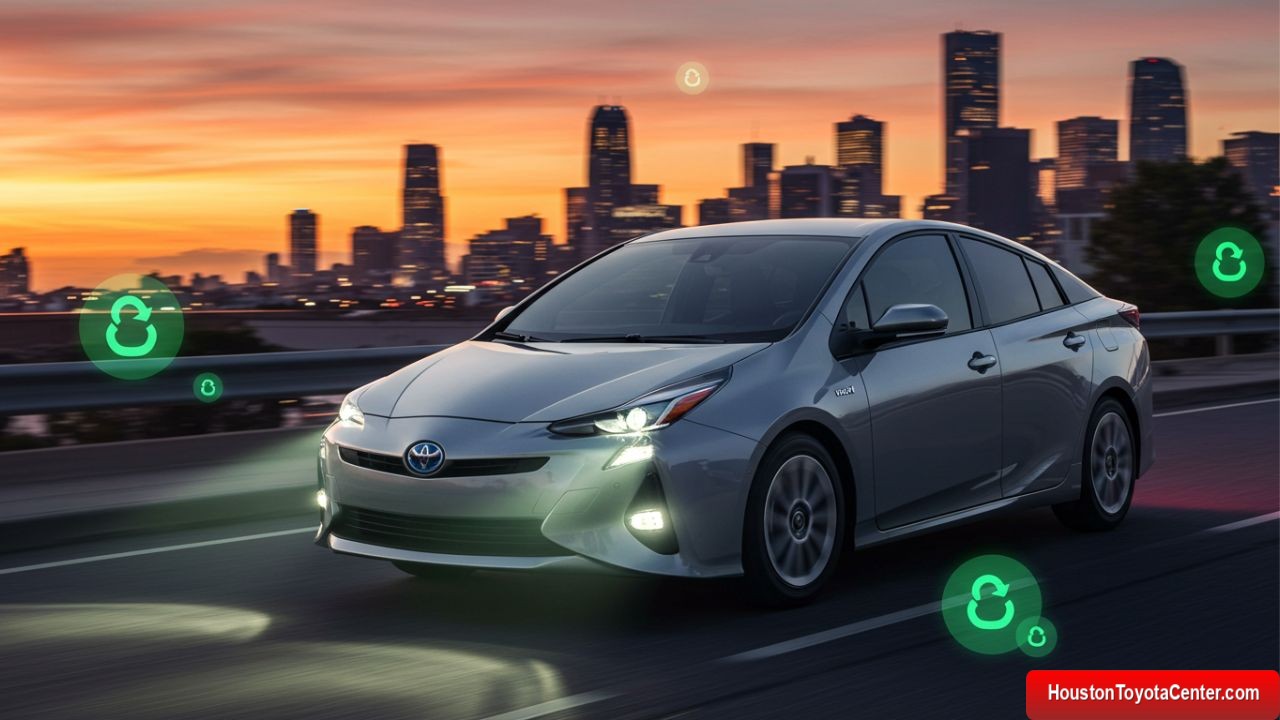
The Toyota Prius has long been associated with fuel efficiency, but its appeal extends beyond saving money at the pump. Modern Prius models also place a strong emphasis on safety, combining driver assistance technologies, passive protection systems, and features designed to help prevent collisions.
For drivers considering a Prius, understanding these safety technologies can be just as important as knowing its fuel economy figures. Here is a closer look at the key safety features found in the Prius and how they are designed to work.
Toyota Safety Sense: The Core of Prius Driver Assistance
A central part of the Prius safety package is Toyota Safety Sense, a collection of active safety and driver assistance technologies. Depending on the model year, trim level, and market, the exact features can vary.
The system is designed around a simple principle: helping drivers recognize potential hazards and respond before a collision occurs.
FREE: Quickly identify and understand problems with your vehicle 🚘
CLICK HEREAmong its most important functions are technologies that can monitor the road ahead, detect vehicles and pedestrians, provide warnings, and assist with braking or steering when conditions require additional support.
These systems are not intended to replace an attentive driver. Instead, they act as an additional layer of protection.
Pre-Collision Detection and Automatic Braking
One of the Prius’s most important active safety technologies is its pre-collision system.
Using sensors and other detection technology, the system can identify certain potential collisions and alert the driver. If a crash appears imminent, the vehicle may also provide braking assistance or automatically apply the brakes, depending on the system’s capabilities and driving conditions.
The goal is to reduce the likelihood or severity of a frontal collision.
This technology can be particularly useful in situations where a driver has limited time to react, although its performance can be affected by factors such as weather, visibility, road conditions, and the behavior of other road users.
Lane Departure and Steering Assistance
Keeping a vehicle within its lane is another major part of modern Prius safety technology.
Lane departure warning systems can monitor road markings and alert the driver when the vehicle begins to drift from its lane under certain conditions. Some versions can also provide steering assistance to help guide the vehicle back toward the intended path.
The technology is designed as a driver aid rather than an autonomous driving system. Drivers remain responsible for maintaining control and paying attention to the road.
Adaptive Cruise Control
The Prius can also be equipped with adaptive cruise control, a feature designed to make highway driving less demanding.
Unlike conventional cruise control, adaptive systems can adjust the vehicle’s speed to help maintain a selected following distance from traffic ahead. When traffic slows, the system can reduce the Prius’s speed. When the road clears, it can return toward the driver’s selected cruising speed, within the system’s operating limits.
For long highway journeys, this can reduce the amount of constant acceleration and braking required from the driver.
Blind Spot Monitoring
Changing lanes can present a significant risk when another vehicle is hidden from the driver’s direct view.
Blind spot monitoring systems are designed to address this problem by detecting vehicles in areas that may be difficult to see through the mirrors. When a vehicle is detected in a monitored blind spot, the Prius can provide a visual warning and, depending on the configuration, additional alerts.
This feature can be especially useful in busy traffic, but drivers should still check their mirrors and surroundings before changing lanes.
Rear Cross-Traffic Alert
Backing out of a parking space or driveway can create another visibility challenge.
Rear cross-traffic alert is designed to detect approaching vehicles or other hazards from the sides while the vehicle is reversing. If the system detects a potential conflict, it can warn the driver.
The feature can provide an additional layer of awareness in crowded parking lots and other areas where parked vehicles may block the driver’s view.
A Stronger Safety Foundation
Active driver assistance is only part of the Prius safety equation. The vehicle also relies on structural engineering and passive safety equipment designed to protect occupants when a collision occurs.
Depending on the model and market, these systems can include multiple airbags, seat belt systems, reinforced body structures, and other occupant protection technologies.
The purpose is straightforward: reduce the forces experienced by people inside the vehicle and help maintain a protective space around occupants during a crash.
Safety Technology Has Limits
Despite the growing sophistication of modern vehicles, no safety system can eliminate the risks associated with driving.
Sensors can be affected by heavy rain, snow, dirt, glare, poor visibility, unusual road layouts, or other environmental conditions. Driver assistance features may also have specific speed ranges and operating limitations.
For that reason, Prius safety technology should be viewed as an extra layer of protection, not a substitute for responsible driving.
Drivers should continue to watch the road, obey traffic laws, maintain appropriate speeds, and remain prepared to take control of the vehicle at all times.
What Makes the Prius Safety Package Important?
The Prius’s safety features reflect a broader change in automotive design. Modern vehicles increasingly combine traditional crash protection with technologies that attempt to prevent accidents before they happen.
That combination is important. Airbags and reinforced structures help protect occupants when a crash occurs, while systems such as collision detection, lane assistance, adaptive cruise control, and blind spot monitoring are designed to help drivers avoid dangerous situations in the first place.
For prospective Prius buyers, the exact safety equipment should always be checked against the specific model year, trim, and market. Technology can change significantly between generations and configurations.
Ultimately, the Prius safety package is best understood as a layered approach. The vehicle combines physical protection with electronic driver assistance, giving drivers more tools to identify hazards and respond to them.
The technology may not make driving risk-free, but it can provide an important additional margin of safety when used correctly.
Leave a Reply