
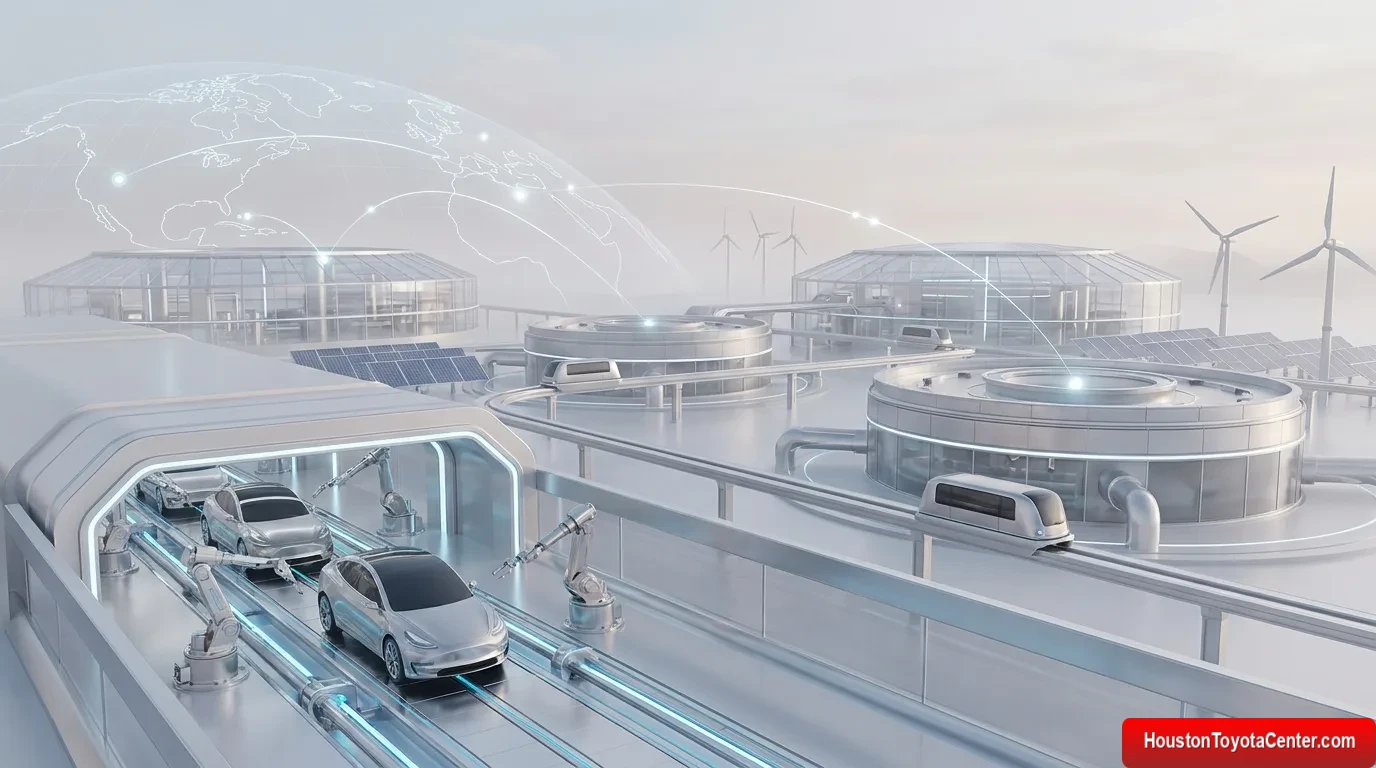
The automotive industry is entering one of the most transformative periods in its history. For more than a century, vehicle manufacturing hubs emerged around access to labor, raw materials, transportation networks, and consumer markets. Cities and regions became synonymous with automotive excellence: Detroit in the United States, Stuttgart in Germany, Toyota City in Japan, and later manufacturing clusters across China, Mexico, South Korea, and Eastern Europe.
Today, however, the forces shaping automotive production are changing rapidly. Electrification, digitalization, automation, artificial intelligence, geopolitical shifts, environmental regulations, and supply chain resilience concerns are redefining where vehicles are built and how manufacturing ecosystems operate. The traditional model of concentrating production solely around labor costs or market proximity is evolving into a more sophisticated framework that prioritizes technology, sustainability, talent, energy availability, and strategic independence.
As the global automotive sector transitions toward electric mobility and software-defined vehicles, the future of manufacturing hubs will not simply involve producing cars more efficiently. Instead, they will become integrated innovation ecosystems where software development, battery production, advanced materials research, robotics, and renewable energy infrastructure converge.
Understanding the future of global auto manufacturing hubs provides valuable insight into how economic power, industrial competitiveness, and technological leadership may be distributed over the coming decades.
FREE: Quickly identify and understand problems with your vehicle 🚘
CLICK HEREThe Evolution of Automotive Manufacturing Centers
The first generation of automotive manufacturing hubs emerged during the early twentieth century. Their success depended largely on access to steel, railroads, ports, and a growing industrial workforce.
The second generation expanded globally as automakers sought lower production costs and access to emerging consumer markets. During this period, countries such as Mexico, South Korea, Thailand, and China became increasingly important production centers.
The third generation is now taking shape. Unlike previous eras, the primary competitive advantages are no longer limited to labor costs or geographic location. Modern manufacturing hubs must excel in several strategic areas:
- Battery production capability
- Semiconductor access
- Renewable energy availability
- Advanced automation
- Skilled engineering talent
- Digital infrastructure
- Supply chain resilience
- Research and development ecosystems
- Government support and industrial policy
The automotive factory of the future is becoming a high-tech production environment that resembles a software campus and robotics laboratory as much as a traditional assembly plant.
The Rise of Electric Vehicle Manufacturing Ecosystems
Electric vehicles are fundamentally reshaping manufacturing geography.
Internal combustion vehicles require thousands of moving parts, extensive mechanical systems, and complex supplier networks. Electric vehicles simplify many aspects of vehicle architecture while increasing dependence on batteries, electronics, and software.
As a result, the most valuable manufacturing hubs increasingly center around battery ecosystems rather than engine production facilities.
Key Components Driving New Hub Development
| Manufacturing Driver | Importance in EV Era |
|---|---|
| Battery Cell Production | Extremely High |
| Semiconductor Supply | Extremely High |
| Renewable Energy Access | High |
| Software Engineering Talent | High |
| Critical Mineral Processing | High |
| AI and Robotics Infrastructure | Medium to High |
| Traditional Engine Manufacturing | Declining |
| Fuel Supply Infrastructure | Declining |
This shift is causing significant changes in global investment patterns. Regions that previously lacked strong automotive traditions can become major players if they develop competitive battery supply chains and advanced manufacturing capabilities.
China’s Expanding Leadership
China has emerged as the dominant force in electric vehicle manufacturing.
Its strength extends far beyond vehicle assembly. China has built an integrated ecosystem that includes:
- Battery manufacturing
- Critical mineral processing
- Electronics production
- Vehicle assembly
- Charging infrastructure
- Software development
- Renewable energy deployment
The country produces a substantial share of the world’s lithium-ion batteries and controls major segments of battery material processing.
Chinese automotive hubs benefit from extraordinary industrial clustering. Suppliers, research institutions, battery manufacturers, and automakers often operate within close geographic proximity. This concentration reduces logistics costs, accelerates innovation cycles, and improves manufacturing efficiency.
Cities such as Shanghai, Shenzhen, Guangzhou, and Hefei have become symbols of this new manufacturing model.
The future challenge for China is maintaining competitiveness while responding to increasing trade barriers, geopolitical tensions, and efforts by other regions to diversify supply chains.
North America’s Manufacturing Transformation
North America is experiencing a manufacturing renaissance driven largely by electric vehicles.
The United States and Canada are investing heavily in battery production, semiconductor manufacturing, and clean energy infrastructure. New industrial policies have accelerated domestic investment in automotive supply chains.
Several trends are shaping the region:
Battery Belt Development
A new “Battery Belt” is emerging across parts of the United States and Canada.
This region includes numerous battery plants, EV assembly facilities, and supplier networks concentrated near transportation corridors and energy resources.
The goal is to create vertically integrated supply chains that reduce dependence on overseas suppliers.
Reshoring and Nearshoring
Manufacturers increasingly seek to reduce supply chain risks.
This has encouraged:
- Reshoring production to the United States
- Expanding manufacturing in Canada
- Increasing investment in Mexico
Mexico remains especially attractive due to:
- Competitive labor costs
- Strong logistics networks
- Existing automotive expertise
- Trade agreements supporting regional integration
As a result, North America is becoming a more interconnected manufacturing ecosystem.
Europe’s Sustainable Manufacturing Vision
Europe approaches automotive manufacturing through the lens of sustainability, innovation, and regulatory leadership.
European hubs benefit from:
- Advanced engineering expertise
- Strong research institutions
- High-quality infrastructure
- Sophisticated supplier networks
However, the region also faces challenges:
- Higher energy costs
- Aging demographics
- Intense international competition
- Dependence on imported raw materials
To remain competitive, Europe is focusing on creating green manufacturing hubs powered by renewable energy and circular economy principles.
The Green Factory Model
Future European automotive plants increasingly emphasize:
- Carbon-neutral operations
- Renewable electricity
- Recycled materials
- Water conservation
- Smart manufacturing systems
These facilities aim to reduce environmental impact while maintaining productivity and quality.
The green factory concept may become a global benchmark as sustainability expectations continue to rise.
India’s Emerging Opportunity
India represents one of the most promising future automotive manufacturing hubs.
Several factors support its rise:
Massive Domestic Market
India possesses one of the world’s largest potential vehicle markets.
Growing urbanization, rising incomes, and expanding infrastructure create strong long-term demand.
Talent Availability
India produces millions of graduates annually, including large numbers of engineers and software developers.
As vehicles become increasingly software-driven, this talent base becomes a significant competitive advantage.
Government Support
Industrial initiatives encourage investment in:
- EV manufacturing
- Battery production
- Electronics assembly
- Renewable energy
Although India still faces infrastructure and logistics challenges, continued investment could position the country as a major automotive exporter within the next two decades.
Southeast Asia’s Strategic Position
Southeast Asia is becoming an increasingly important automotive region.
Countries such as Thailand, Vietnam, Indonesia, and Malaysia are competing for investment in electric vehicle production.
Indonesia stands out due to its large nickel reserves, which are critical for many battery technologies.
Advantages of Southeast Asian hubs include:
- Growing consumer markets
- Competitive labor costs
- Strategic shipping locations
- Expanding industrial infrastructure
The region could become a major beneficiary of supply chain diversification strategies.
The Critical Role of Batteries
No factor will influence future automotive manufacturing hubs more than batteries.
Battery production determines:
- Manufacturing costs
- Vehicle pricing
- Supply chain security
- Technological competitiveness
Future hubs will likely emerge near battery ecosystems rather than traditional engine production centers.
Battery Hub Characteristics
Successful battery manufacturing clusters typically include:
| Component | Strategic Value |
| Cell Manufacturing | Critical |
| Cathode Production | Critical |
| Anode Production | High |
| Recycling Facilities | High |
| Research Centers | High |
| Renewable Energy Access | High |
| Logistics Infrastructure | High |
Regions that develop complete battery ecosystems may gain significant competitive advantages.
Software-Defined Vehicles and New Industrial Geography
Modern vehicles increasingly resemble computers on wheels.
Software now influences:
- Performance
- Safety
- Navigation
- Energy management
- Autonomous driving
- User experience
This evolution changes the requirements for manufacturing hubs.
Future automotive centers must attract:
- Software engineers
- AI researchers
- Cybersecurity experts
- Cloud computing specialists
- Data scientists
Manufacturing and software development are becoming deeply interconnected.
As a result, regions with strong technology sectors may gain automotive significance even if they lack traditional manufacturing histories.
Artificial Intelligence in Manufacturing
AI is transforming every stage of vehicle production.
Applications include:
Predictive Maintenance
AI systems monitor equipment and identify failures before they occur.
Benefits include:
- Reduced downtime
- Lower maintenance costs
- Improved productivity
Quality Control
Computer vision systems inspect vehicles with exceptional precision.
These systems can detect defects that might be missed by human inspectors.
Production Optimization
AI continuously analyzes manufacturing processes to improve efficiency.
Factories increasingly become self-optimizing environments capable of adapting to changing conditions in real time.
The automotive hub of the future will rely heavily on AI-enabled operations.
Robotics and Hyperautomation
Automation is advancing far beyond traditional industrial robots.
Future factories will deploy:
- Collaborative robots
- Autonomous mobile robots
- Intelligent logistics systems
- AI-powered assembly equipment
Hyperautomation allows facilities to produce more vehicles with fewer disruptions and greater flexibility.
Manufacturing hubs that invest heavily in advanced robotics will likely gain substantial productivity advantages.
Supply Chain Resilience as a Competitive Advantage
Recent disruptions exposed vulnerabilities in global supply chains.
The automotive industry experienced shortages of:
- Semiconductors
- Battery materials
- Shipping capacity
- Electronic components
Future manufacturing hubs will prioritize resilience alongside efficiency.
Strategies include:
- Geographic diversification
- Multiple supplier relationships
- Localized production
- Strategic inventories
- Digital supply chain monitoring
The era of optimizing solely for lowest cost is ending.
Manufacturers increasingly value reliability and flexibility.
The Semiconductor Factor
Semiconductors have become essential automotive components.
Electric vehicles require significantly more chips than conventional vehicles.
Future manufacturing hubs may increasingly cluster around semiconductor ecosystems.
Key requirements include:
- Chip design expertise
- Fabrication capacity
- Packaging facilities
- Testing infrastructure
Regions capable of integrating semiconductor and automotive production may enjoy powerful competitive advantages.
Renewable Energy and Manufacturing Competitiveness
Energy is becoming a strategic differentiator.
Electric vehicle production is energy-intensive, especially battery manufacturing.
Future hubs will increasingly seek access to:
- Solar power
- Wind energy
- Hydroelectricity
- Energy storage systems
Renewable energy offers several benefits:
- Lower long-term costs
- Reduced emissions
- Greater energy security
- Improved sustainability credentials
The availability of abundant clean energy may influence manufacturing location decisions as much as labor costs once did.
Circular Economy Manufacturing
The future automotive industry will place increasing emphasis on resource efficiency.
Circular economy principles include:
- Material recycling
- Battery reuse
- Component remanufacturing
- Waste reduction
Manufacturing hubs capable of recovering valuable materials from end-of-life vehicles may gain important economic advantages.
Battery recycling is especially significant because it helps secure access to critical materials while reducing environmental impact.
Smart Factories and Digital Twins
Digital transformation is reshaping industrial operations.
One of the most powerful developments is the adoption of digital twins.
A digital twin is a virtual representation of a physical factory.
Manufacturers can use these models to:
- Simulate production changes
- Predict bottlenecks
- Test new layouts
- Improve efficiency
Future manufacturing hubs will increasingly consist of interconnected smart factories sharing data across entire industrial ecosystems.
Workforce Transformation
The workforce requirements of automotive manufacturing are changing dramatically.
Demand is increasing for:
| Skill Area | Future Importance |
| Software Development | Very High |
| Robotics Engineering | Very High |
| Data Analytics | High |
| AI Expertise | High |
| Battery Engineering | Very High |
| Cybersecurity | High |
| Traditional Mechanical Skills | Moderate |
The most successful manufacturing hubs will be those capable of attracting and retaining highly skilled talent.
Universities, research centers, and vocational training institutions will become essential components of automotive ecosystems.
Geopolitics and Industrial Policy
Government policies increasingly influence manufacturing decisions.
Countries are competing to attract investment through:
- Tax incentives
- Infrastructure spending
- Research funding
- Workforce development programs
Industrial policy is becoming a major factor in determining future manufacturing locations.
Rather than relying exclusively on market forces, governments are actively shaping automotive ecosystems.
This trend is likely to continue throughout the coming decades.
Regional Winners and Emerging Leaders
Several regions appear particularly well-positioned for future growth.
Strong Future Candidates
- China
- United States
- Canada
- Mexico
- Germany
- India
- South Korea
- Indonesia
- Vietnam
Each region possesses unique strengths.
Some excel in technology.
Others benefit from resources.
Still others offer favorable demographics or strategic geographic locations.
The future automotive landscape will likely be more distributed than previous eras, with multiple specialized hubs interconnected through digital networks and resilient supply chains.
Challenges Facing Future Manufacturing Hubs
Despite tremendous opportunities, several challenges remain.
Resource Constraints
Demand for critical minerals may increase dramatically.
This creates risks involving:
- Supply shortages
- Price volatility
- Environmental concerns
Infrastructure Requirements
Modern manufacturing ecosystems require:
- Reliable electricity
- Advanced logistics
- High-speed connectivity
- Skilled labor pipelines
Developing these assets requires substantial investment.
Technological Disruption
Rapid technological change can quickly alter competitive dynamics.
Regions that fail to adapt risk losing relevance.
Continuous innovation will be essential.
The Factory of 2040
By 2040, automotive factories may look dramatically different from today’s facilities.
Key characteristics may include:
- AI-managed production lines
- Fully integrated digital twins
- Autonomous logistics systems
- Carbon-neutral operations
- Advanced battery recycling
- Highly flexible manufacturing cells
- Real-time supply chain visibility
Vehicles themselves will likely be assembled using more modular architectures, enabling faster production and greater customization.
The distinction between manufacturing, software development, and energy management will become increasingly blurred.
Conclusion
The future of global auto manufacturing hubs will be shaped by far more than assembly-line efficiency. Success will depend on the ability to integrate advanced technologies, sustainable energy systems, resilient supply chains, software expertise, and innovative industrial policies into cohesive ecosystems.
Electric vehicles, batteries, artificial intelligence, robotics, and digital manufacturing are redefining what it means to be a leading automotive center. Regions that successfully combine these capabilities will emerge as the dominant manufacturing hubs of the twenty-first century.
Rather than a world dominated by a few traditional automotive centers, the coming decades are likely to produce a diverse network of specialized hubs spread across North America, Europe, Asia, and emerging markets. These hubs will compete not only on cost, but on innovation, sustainability, resilience, and technological sophistication.
The automotive industry has always reflected broader economic and technological transformations. As mobility enters a new era, the geography of manufacturing will evolve alongside it, creating new centers of industrial power and redefining the future of global production.
Leave a Reply