
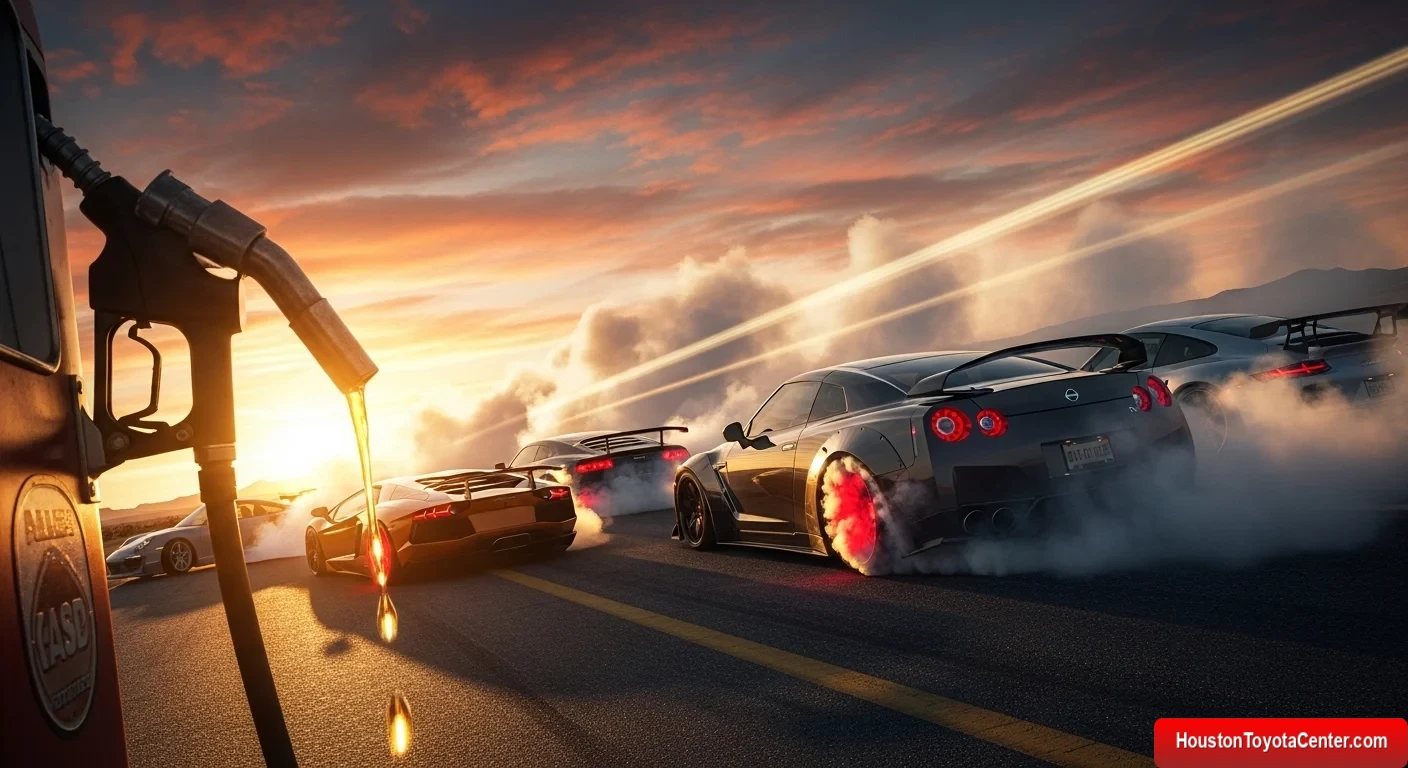
There’s a certain kind of irrational love that exists in the automotive world—one that defies logic, economics, and even environmental consciousness. It’s the love for cars that drink fuel like it’s an all-you-can-eat buffet. These are the vehicles that make your wallet wince every time you pull into a gas station, yet somehow, you can’t help but smile every time you press the accelerator.
In an era increasingly dominated by hybrid systems, electric drivetrains, and efficiency-focused engineering, gas-guzzling cars feel like rebellious relics—or, in some cases, unapologetic modern beasts. They are loud, powerful, dramatic, and deeply flawed in one very specific way: they burn fuel at a rate that would make a fuel economist cry.
And yet, we love them.
This article explores why cars with terrible gas mileage still hold a special place in our hearts, what makes them so compelling, and highlights some of the most infamous fuel-thirsty machines ever built.
FREE: Quickly identify and understand problems with your vehicle 🚘
CLICK HEREWhy Do We Love Inefficient Cars?
At first glance, it seems absurd. Fuel efficiency is practical. It saves money, reduces environmental impact, and extends driving range. So why would anyone willingly choose the opposite?
The answer lies in emotion.
1. Power and Performance
Most cars with poor fuel economy share a common trait: massive engines. Whether it’s a roaring V8, a thunderous V10, or an absurdly large V12, these engines are built for performance, not efficiency.
Large engines:
- Produce more horsepower and torque
- Deliver exhilarating acceleration
- Provide a visceral driving experience
Fuel efficiency often takes a backseat when the goal is to create something thrilling.
2. Sound and Drama
There is something undeniably intoxicating about the sound of a powerful engine. The deep rumble of a V8 or the high-pitched scream of a V12 is more than just noise—it’s emotion translated into sound.
Efficient cars are often quiet and subdued. Gas guzzlers, on the other hand, announce their presence.
3. Design and Identity
Many inefficient cars are bold in design. They are not built to blend in; they are built to stand out.
They tend to be:
- Aggressive in styling
- Larger than necessary
- Designed with performance in mind
They embody a kind of automotive identity that prioritizes character over compromise.
4. Nostalgia
For many enthusiasts, inefficient cars represent a golden era of automotive design—before strict emissions regulations and fuel economy standards reshaped the industry.
They remind us of:
- Classic muscle cars
- The rise of supercars
- A time when engineering focused more on excitement than efficiency
The Trade-Off: What You Sacrifice
Before diving into specific cars, it’s important to understand what you’re giving up when you choose a gas guzzler.
| Factor | Efficient Cars | Gas Guzzlers |
|---|---|---|
| Fuel Cost | Low | Very High |
| Range | Long | Short |
| Environmental Impact | Lower | Higher |
| Maintenance | Moderate | Often Expensive |
| Driving Excitement | Moderate | High |
Despite these drawbacks, enthusiasts often find the trade-off worth it.
Categories of Fuel-Thirsty Legends
Not all inefficient cars are the same. They generally fall into a few key categories:
1. Muscle Cars
Built for straight-line speed, often with large displacement engines.
2. Supercars
High-performance machines where efficiency is irrelevant.
3. Luxury Land Yachts
Large, heavy cars with powerful engines designed for comfort and presence.
4. SUVs and Trucks
Massive vehicles with poor aerodynamics and heavy weight.
Notorious Gas Guzzlers We Can’t Help Loving
Let’s explore some iconic examples that perfectly embody this paradox.
Muscle Cars: Power Over Practicality
Muscle cars have always been about one thing: raw, unfiltered power.
Dodge Challenger Hellcat
With a supercharged V8 engine producing over 700 horsepower, this car is a perfect example of excess.
- Fuel economy: Extremely poor
- Experience: Explosive acceleration
- Personality: Loud, aggressive, unapologetic
Driving it feels like commanding a controlled explosion.
Ford Mustang Shelby GT500
This modern muscle car pushes the limits of what a road car can be.
- Massive power output
- Terrible fuel efficiency
- Incredible performance
It’s a car that prioritizes adrenaline over practicality.
Supercars: Efficiency Becomes Irrelevant
In the world of supercars, fuel economy is almost an afterthought.
Lamborghini Aventador
A V12-powered masterpiece that delivers breathtaking performance—and equally breathtaking fuel consumption.
- Fuel economy: Among the worst in modern cars
- Sound: Operatic
- Driving experience: Intense and unforgettable
You don’t buy it to save fuel—you buy it to feel alive.
Bugatti Chiron
An engineering marvel with a quad-turbocharged W16 engine.
- Power: Insane
- Fuel consumption: Equally insane
- Purpose: Pushing the limits of what’s possible
This is excess taken to its absolute extreme.
Luxury Giants: Comfort at a Cost
Some cars combine luxury with inefficiency in spectacular fashion.
Rolls-Royce Phantom
A symbol of ultimate luxury, powered by a massive engine that prioritizes smoothness over efficiency.
- Fuel economy: Poor
- Comfort: Unmatched
- Driving feel: Effortless
Fuel consumption is irrelevant when the goal is perfection.
Bentley Mulsanne
A grand tourer with a powerful engine and a taste for fuel.
- Heavy and powerful
- Built for long-distance luxury
- Drinks fuel generously
SUVs and Trucks: Big, Bold, and Thirsty
Large vehicles often struggle with efficiency due to their size and weight.
Hummer H2
An icon of excess.
- Massive size
- Terrible aerodynamics
- Infamously poor fuel economy
It’s not just a vehicle—it’s a statement.
Ford F-150 Raptor
A performance truck that sacrifices efficiency for capability.
- Built for off-road performance
- High fuel consumption
- Extremely capable
Why Efficiency Doesn’t Always Matter
Despite rising fuel costs and environmental concerns, inefficient cars still have a place.
Emotional Value
Driving is not always about getting from point A to point B. Sometimes it’s about the experience.
Gas guzzlers offer:
- Excitement
- Engagement
- Personality
Limited Use
Many owners don’t drive these cars daily. They are:
- Weekend toys
- Collector’s items
- Occasional indulgences
This reduces the impact of their inefficiency.
Cultural Significance
These cars often represent milestones in automotive history.
They are:
- Symbols of innovation
- Expressions of engineering ambition
- Icons of their time
The Psychology Behind Loving Gas Guzzlers
There’s a deeper psychological component at play.
1. Rebellion
Choosing an inefficient car in an efficiency-focused world feels rebellious. It’s a statement against conformity.
2. Sensory Experience
Gas guzzlers engage multiple senses:
- Sound
- Vibration
- Acceleration
Efficient cars often lack this intensity.
3. Identity
For many, cars are an extension of identity. Driving a powerful, inefficient car can reflect:
- Confidence
- Passion
- Individuality
Are Gas Guzzlers Disappearing?
The automotive world is changing rapidly.
Trends Toward Efficiency
- Electrification is increasing
- Governments are imposing stricter regulations
- Manufacturers are focusing on sustainability
The Future of Performance
Interestingly, performance is not disappearing—it’s evolving.
Electric cars can:
- Accelerate faster than many gas-powered cars
- Deliver instant torque
- Provide new kinds of driving excitement
However, they often lack the emotional qualities of traditional gas guzzlers.
Comparing Fuel Consumption
To better understand how extreme some of these cars are, consider the following comparison:
| Vehicle Type | Average MPG (Miles Per Gallon) |
|---|---|
| Hybrid Sedan | 50+ MPG |
| Compact Car | 30–40 MPG |
| Standard SUV | 20–25 MPG |
| Muscle Car | 10–18 MPG |
| Supercar | 8–15 MPG |
| Heavy SUV/Truck | 8–14 MPG |
The difference is staggering—and yet, for enthusiasts, it’s part of the charm.
The Joy of Imperfection
One of the most interesting aspects of gas guzzlers is that their flaws are part of their appeal.
They are:
- Impractical
- Expensive to run
- Environmentally unfriendly
And yet, they are also:
- Thrilling
- Memorable
- Full of character
In a world that increasingly values optimization and efficiency, these cars remind us that imperfection can be beautiful.
Ownership: A Love-Hate Relationship
Owning a gas guzzler is not always easy.
The Downsides
- Frequent fuel stops
- High operating costs
- Environmental guilt
The Upsides
- Unmatched driving pleasure
- Emotional connection
- Sense of occasion
Every drive feels special.
When Does It Make Sense?
Owning an inefficient car can make sense in certain situations:
- As a second or third vehicle
- For enthusiasts who prioritize experience
- For collectors
It’s less about practicality and more about passion.
The Cultural Legacy of Gas Guzzlers
These cars have left an undeniable mark on culture.
They appear in:
- Movies
- Music videos
- Video games
They are symbols of:
- Power
- Freedom
- Excess
Their legacy will likely outlive their widespread use.
Final Thoughts
Cars with terrible gas mileage exist in a strange and fascinating space. They are impractical, expensive, and increasingly out of step with modern values. And yet, they continue to capture our imagination.
They remind us that not everything needs to be optimized. That sometimes, the joy of an experience outweighs its cost. That emotion can matter more than logic.
In the end, loving these cars isn’t about ignoring their flaws—it’s about embracing them.
Because sometimes, the things that make the least sense are the ones that make us feel the most alive.
Leave a Reply