
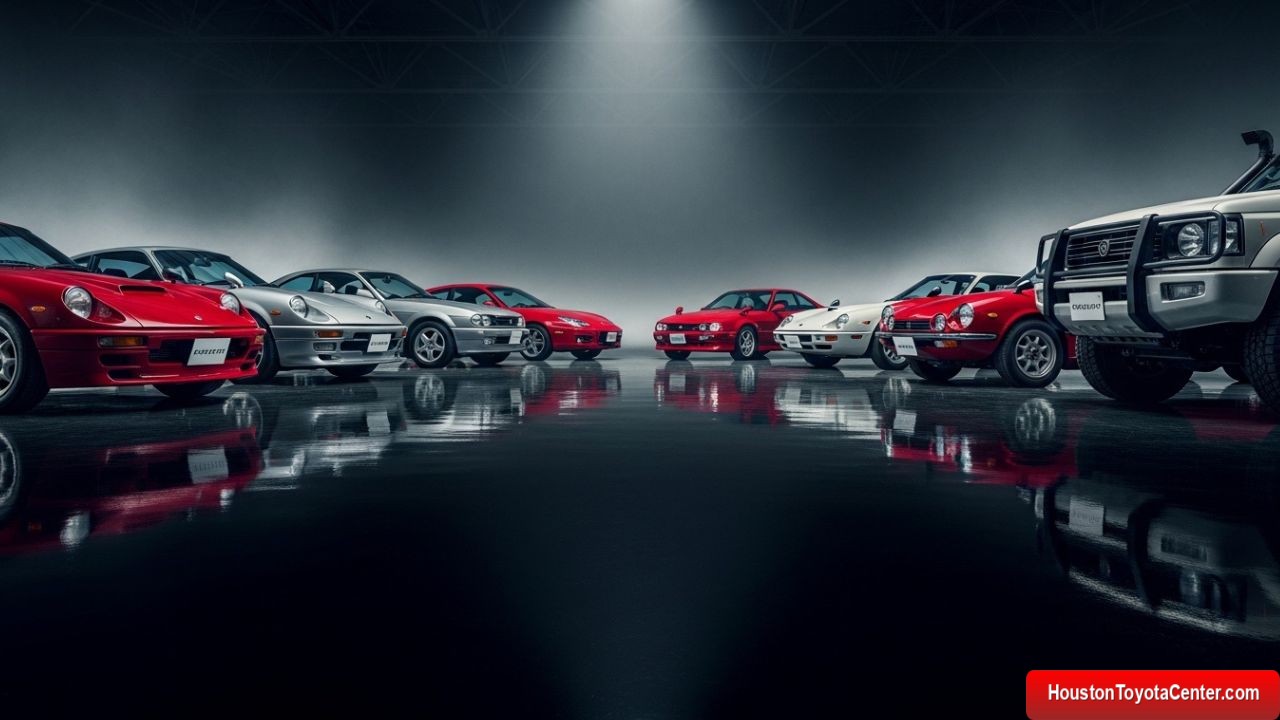
When discussing automotive design across the last century, few companies have demonstrated the range, consistency, and cultural adaptability of Toyota Motor Corporation. From utilitarian off-roaders and affordable family sedans to exotic sports cars and futuristic hybrids, Toyota’s design journey mirrors the evolution of global mobility itself. Unlike brands that built their identity around a single visual philosophy, Toyota’s legacy is defined by versatility—an ability to design vehicles that resonate across continents, generations, and market segments.
This article explores Toyota’s most iconic designs decade by decade, examining not only how these vehicles looked, but why they mattered. Design is never just about aesthetics; it’s about proportion, engineering packaging, cultural messaging, technology integration, and emotional appeal. Toyota’s most memorable models did more than sell in large numbers—they shifted expectations and reshaped automotive categories.
The 1960s: The Birth of Japanese Automotive Prestige
Toyota 2000GT (1967)
If there is one model that permanently altered the global perception of Japanese car design, it was the Toyota 2000GT. In the 1960s, European manufacturers dominated the conversation around performance and beauty. The 2000GT changed that narrative.
Low-slung, long-hooded, and elegantly proportioned, the 2000GT demonstrated a level of sculptural refinement that rivaled the best sports cars from Europe. Its flowing fenders, recessed headlights (later pop-ups in export versions), and sweeping fastback roofline created a cohesive silhouette that was athletic without being aggressive. It balanced grace and performance—a rare achievement for a first-generation sports car from a relatively young manufacturer.
FREE: Quickly identify and understand problems with your vehicle 🚘
CLICK HEREThe design language was influenced by global grand tourers, but it retained a subtle Japanese sensibility—minimal ornamentation, clean surfaces, and careful detailing. The cabin was equally refined, featuring rosewood trim and a driver-focused dashboard that elevated Toyota into a new realm of sophistication.
More than just a beautiful car, the 2000GT established Toyota’s credibility as a design-led manufacturer capable of emotional appeal, not merely practical transportation.
The 1970s: Function, Durability, and Global Expansion
Land Cruiser 40 Series
The 1970s were defined by oil crises, rugged exploration, and the need for durable engineering. The Land Cruiser 40 Series became an icon of resilience.
Its design was unapologetically utilitarian. Flat body panels, exposed hinges, round headlights, upright windshield, and short overhangs were dictated by off-road function. Yet this functional minimalism gave it a timeless character. The vertical grille bars and bold TOYOTA lettering created a visual identity that still influences modern interpretations of rugged SUVs.
Unlike delicate urban vehicles, the 40 Series projected mechanical honesty. Every design element communicated strength: thick fenders, robust bumpers, and a high ground clearance that visually reinforced its capability. In design terms, it was a study in purpose-driven form—no excess, no pretense.
The Land Cruiser’s global success helped define Toyota as a manufacturer capable of building vehicles for extreme environments—from deserts to jungles—while maintaining a consistent design identity.
Corolla (E20 and E30 Generations)
While the Land Cruiser embodied toughness, the Corolla defined accessible global mobility. The second and third generations in the 1970s introduced cleaner, more modern proportions compared to earlier compacts.
The Corolla’s design language focused on simplicity and approachability. Slim pillars improved visibility and gave the cabin an airy feel. Subtle character lines prevented slab-sided monotony. Rectangular headlights—an emerging trend at the time—modernized the front fascia.
The brilliance of the Corolla design was not flamboyance but balance. It was neither too bold nor too conservative. It looked reliable before you even drove it. That visual reassurance played a crucial role in building trust in export markets.
The Corolla would go on to become one of the best-selling cars in history, but its early design choices laid the foundation for decades of global acceptance.
The 1980s: Aerodynamics and Technological Confidence
The 1980s marked a shift toward aerodynamic efficiency and futuristic styling cues. Toyota responded with designs that embraced smoother forms and improved wind tunnel performance.
Celica (Fourth Generation, 1985–1989)
The fourth-generation Celica signaled Toyota’s growing confidence in sporty design. Pop-up headlights, a wedge-shaped profile, and integrated bumpers created a cohesive aerodynamic shape that felt modern and aspirational.
The car’s proportions emphasized forward motion. Even when stationary, it looked dynamic. The sharply angled windshield and smooth transitions between hood and fenders reduced drag while visually reinforcing speed.
This Celica generation aligned Toyota with global sports coupe trends while maintaining everyday usability. It demonstrated that Toyota could merge reliability with emotional styling.
Supra (A70, 1986–1993)
The Supra evolved from the Celica lineage into its own distinct performance flagship. The A70 generation adopted a wide stance, muscular fenders, and a low, assertive nose.
Unlike the elegance of the 2000GT, the A70 Supra projected technological strength. Integrated spoilers, flush glass, and strong horizontal lines created a planted look. It reflected the late-1980s fascination with turbocharging and advanced engineering.
The interior echoed this high-tech ambition, with wraparound dashboards and digital instrumentation in some variants. It was a design rooted in the optimism of Japan’s economic boom—a bold statement of performance ambition.
The 1990s: Precision, Curves, and Cultural Icons
The 1990s saw Toyota refine its design language, emphasizing rounded surfaces and improved manufacturing precision.
Supra (A80, 1993–2002)
Few Toyota designs have achieved the cult status of the A80 Supra. Its sculpted curves, dramatic rear wing, and signature circular taillights made it instantly recognizable.
The design combined organic curvature with muscular tension. The front fenders bulged subtly, while the cabin sat compactly over the rear wheels, emphasizing rear-wheel-drive proportions. Large air intakes communicated performance without unnecessary ornamentation.
What made the A80 Supra iconic was its balance between aggression and sophistication. It wasn’t overly complex; the surfaces were clean but purposeful. Over time, its appearance became synonymous with tuner culture and global performance enthusiasm.
MR2 (SW20)
The second-generation MR2 embraced mid-engine exotic proportions at an accessible price point. With side air intakes, a low hood, and a compact footprint, it resembled far more expensive sports cars.
The design language was minimalist but expressive. Smooth curves replaced the angularity of its predecessor. The SW20 demonstrated Toyota’s ability to package ambitious engineering within a visually compelling shell.
Camry (XV10 and XV20)
While sports cars grabbed headlines, the Camry quietly shaped Toyota’s global design philosophy. The 1990s Camry adopted soft, rounded forms that projected comfort and refinement.
Its design prioritized harmony. Gently curved body panels and subtle chrome accents created an image of understated quality. It wasn’t dramatic—but that was precisely its appeal. It visually communicated dependability and maturity.
The Camry became a symbol of practical success in many markets, proving that iconic design does not always require flamboyance.
The Late 1990s–2000s: Hybrid Revolution and Design Reorientation
Prius (First and Second Generation)
The Prius marked one of the most consequential design shifts in automotive history. The first generation introduced hybrid technology to the mainstream, but it was the second generation (2003) that cemented its iconic status.
Its tall, triangular silhouette was dictated by aerodynamic optimization and battery packaging. The high rear deck and sharply angled rear glass minimized drag. The design looked different because it was different.
Rather than disguising its hybrid identity, the Prius embraced it. Blue-tinged badges and unique taillight shapes signaled environmental consciousness. This was not just a car; it was a statement.
The Prius demonstrated that eco-focused vehicles did not need to mimic traditional sedans. Its distinct profile became instantly associated with sustainability.
The 2000s: Refinement and Global Scale
As Toyota became one of the largest automakers in the world, its design language broadened further.
Land Cruiser 200 Series
Moving from utilitarian roots to luxury presence, the 200 Series Land Cruiser adopted a more commanding aesthetic. Large chrome grilles, substantial body mass, and sculpted surfaces signaled prestige without sacrificing rugged credibility.
The transition from the 40 Series to the 200 Series illustrates Toyota’s design adaptability: from minimalism to luxury dominance.
Yaris
In urban environments, the Yaris represented compact efficiency. Short overhangs, tall rooflines, and playful proportions made it approachable and practical.
Toyota demonstrated that small cars need not appear cheap. Clean lines and well-integrated lighting elements gave the Yaris a modern character suitable for global city life.
The 2010s: Boldness and Emotional Rebranding
The 2010s marked a decisive stylistic shift. Toyota leadership openly declared that future cars would no longer be visually conservative.
86 (GT86 / Scion FR-S)
Developed as a lightweight rear-wheel-drive coupe, the 86 emphasized driving purity. Its low center of gravity was visually apparent in its compact height and wide stance.
The front fascia featured a sharp, aggressive expression, while the side profile highlighted balance and athleticism. The design referenced classic sports car proportions while maintaining modern crispness.
Mirai (First Generation)
The Mirai’s hydrogen powertrain allowed designers to experiment. Angular body panels, futuristic lighting signatures, and unconventional air channels created a bold aesthetic.
While polarizing, the Mirai symbolized Toyota’s willingness to take visual risks in emerging technologies.
C-HR
The C-HR subcompact crossover showcased dramatic surfacing, hidden rear door handles, and a coupe-like roofline. It targeted younger buyers with a design language that broke from Toyota’s conservative past.
Sharp creases and contrasting roof colors introduced visual energy rarely seen in earlier Toyota crossovers.
The 2020s: Heritage Reimagined and Performance Revival
Supra (A90)
The rebirth of the Supra in the late 2010s carried enormous expectations. The A90 generation adopted exaggerated curves, double-bubble roof contours, and dramatic sculpting.
It paid homage to the A80’s circular lighting motifs while embracing modern aerodynamic complexity. Deep side sculpting and bold proportions ensured it stood apart in a crowded sports car market.
GR Yaris
A rally-inspired hot hatch, the GR Yaris featured flared fenders, a carbon fiber roofline, and aggressive cooling intakes. Its compact body concealed serious performance hardware.
The design communicated intent. It was purposeful and compact—an embodiment of motorsport DNA in a street-legal form.
Latest Land Cruiser (250 Series)
Returning to its heritage, the newest Land Cruiser embraces retro-inspired round headlights and boxy proportions. The design channels the spirit of the 40 Series while incorporating modern lighting and safety standards.
It reflects a broader industry trend: reinterpretation of classic identity in a contemporary context.
Design Philosophy Evolution
Toyota’s design journey can be summarized through several recurring themes:
- Functional Honesty: Early Land Cruisers and Corollas emphasized purpose.
- Technological Expression: Supra and Celica models showcased engineering pride.
- Environmental Identity: Prius introduced sustainability as a visual category.
- Emotional Rebranding: Post-2010 designs embraced boldness and risk.
- Heritage Integration: Modern models reference historic cues while advancing technology.
Decade-by-Decade Snapshot
| Decade | Design Theme | Representative Models | Key Visual Traits |
|---|---|---|---|
| 1960s | Prestige Emergence | 2000GT | Long hood, elegant curves |
| 1970s | Utility & Expansion | Land Cruiser 40, Corolla | Boxy strength, clean simplicity |
| 1980s | Aerodynamics | Celica, Supra A70 | Wedge profiles, pop-up lights |
| 1990s | Curved Precision | Supra A80, MR2, Camry | Organic forms, refined surfaces |
| 2000s | Hybrid Identity | Prius | Triangular silhouette, aero focus |
| 2010s | Bold Rebrand | 86, C-HR, Mirai | Sharp creases, expressive fronts |
| 2020s | Heritage + Performance | Supra A90, GR Yaris, Land Cruiser 250 | Retro cues, muscular surfacing |
The Role of Lexus
Toyota’s luxury division, Lexus, also influenced design direction. As Lexus pursued bold spindle grilles and sharper lines in the 2010s, Toyota adopted more expressive front-end treatments in its mainstream lineup. Cross-pollination between the brands accelerated stylistic evolution.
Why These Designs Endure
Iconic automotive design is not determined solely by beauty. It is defined by:
- Cultural impact
- Longevity
- Emotional resonance
- Engineering authenticity
- Recognizability
Toyota’s most iconic designs succeed because they align aesthetics with purpose. The Land Cruiser looks capable because it is capable. The Prius looks aerodynamic because efficiency defines it. The Supra looks powerful because performance drives its identity.
Conclusion
Over six decades, Toyota has demonstrated a remarkable ability to reinvent its visual language without abandoning its core principles. From the sculptural grace of the 2000GT to the futuristic boldness of the Mirai, from the utilitarian Land Cruiser to the track-inspired GR Yaris, Toyota’s design evolution reflects broader shifts in technology, culture, and consumer expectation.
Unlike manufacturers tied to a single aesthetic philosophy, Toyota thrives on adaptability. Its most iconic designs are not confined to one shape or era. Instead, they represent milestones in a continuous journey—each responding to its time while influencing the next.
Toyota’s story is not just about cars. It is about how design bridges engineering and emotion, practicality and aspiration, tradition and innovation. That balance is what has allowed Toyota’s most iconic designs to endure—not merely as vehicles, but as symbols of their respective eras.
Leave a Reply