
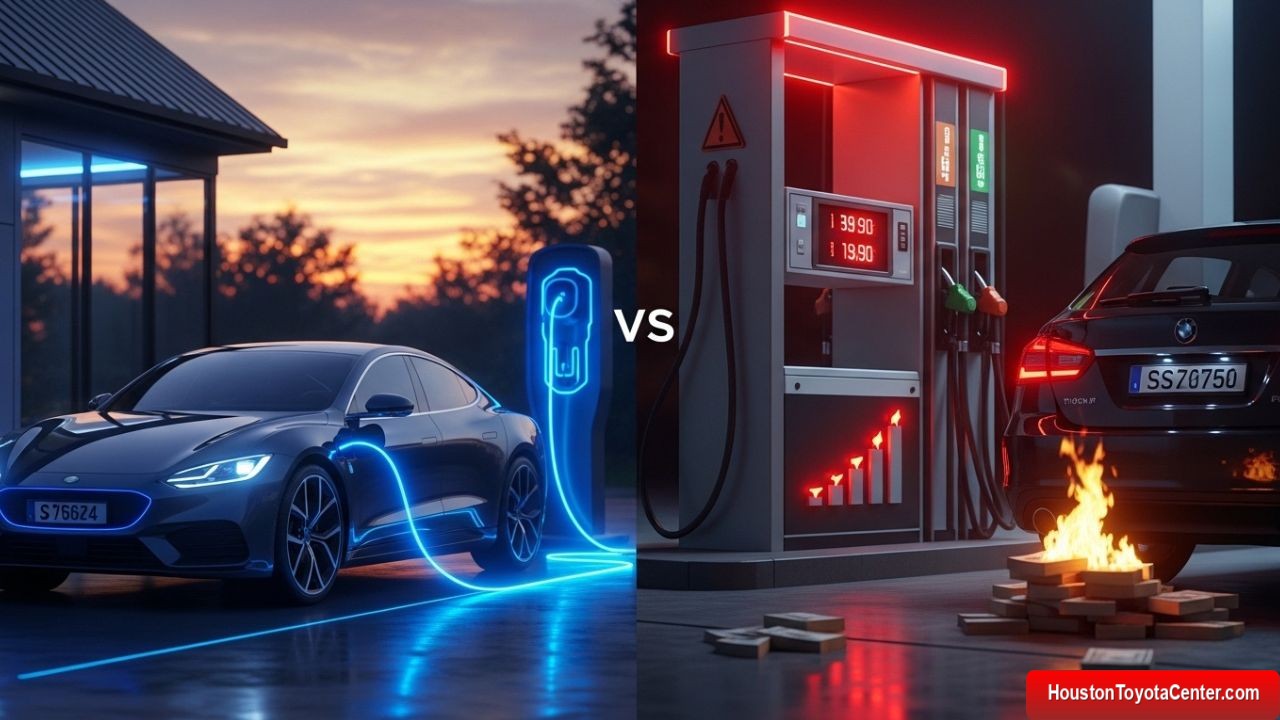
Electric vehicles (EVs) have moved from niche products to mainstream contenders in the global automotive market. Governments promote them, automakers invest billions in their development, and consumers increasingly consider them as alternatives to internal combustion engine (ICE) vehicles. Yet despite rapid adoption, one central question persists: Are electric vehicles truly economical?
Understanding the economics of EVs requires looking beyond the sticker price. The total cost of ownership (TCO) includes purchase cost, financing, energy expenses, maintenance, insurance, depreciation, infrastructure, incentives, environmental externalities, and even resale dynamics. When examined holistically, the economics of EVs reveal a nuanced but increasingly compelling case.
This article provides a deep, structured breakdown of the total cost economics of electric vehicles, comparing them to gasoline and hybrid alternatives. It explores both microeconomic and macroeconomic perspectives, as well as long-term market implications.
1. Purchase Price: The Upfront Barrier
The Premium Problem
Historically, EVs have carried higher upfront prices than comparable gasoline vehicles. For example, models like the Tesla Model 3 initially entered the market at a higher average transaction price than compact sedans powered by gasoline.
FREE: Quickly identify and understand problems with your vehicle 🚘
CLICK HEREThe primary reason is battery cost. Lithium-ion battery packs are expensive due to raw material inputs such as lithium, nickel, cobalt, and manganese. However, battery prices have declined dramatically over the past decade due to economies of scale, improved chemistry, and manufacturing efficiency.
Cost Breakdown of an EV Purchase
| Component | Approximate Share of EV Cost |
|---|---|
| Battery Pack | 30–40% |
| Electric Motor & Power Electronics | 15–20% |
| Chassis & Body | 20–25% |
| Software & Electronics | 10–15% |
| Assembly & Other | 10–15% |
By comparison, ICE vehicles allocate a larger share of cost to engine and transmission systems.
Declining Battery Prices
Battery costs have fallen from over $1,000 per kWh in 2010 to below $150 per kWh in recent years. Analysts estimate that at around $80–$100 per kWh, EVs achieve purchase price parity with ICE vehicles without subsidies.
Automakers like Tesla, Inc. and BYD Company have vertically integrated battery production to accelerate cost reductions.
2. Government Incentives and Subsidies
Direct Consumer Incentives
Many governments offer tax credits, rebates, or grants to offset EV purchase prices.
In the United States, the Inflation Reduction Act provides tax credits up to $7,500 for qualifying EVs, subject to income and manufacturing requirements.
European countries such as Norway and Germany have historically offered substantial incentives, including VAT exemptions and registration tax waivers.
Indirect Incentives
- Access to HOV lanes
- Reduced tolls
- Free municipal parking
- Corporate fleet tax advantages
The Economics of Subsidies
From a public finance perspective, subsidies aim to internalize environmental externalities. By lowering effective purchase cost, governments attempt to accelerate adoption until economies of scale reduce prices naturally.
However, subsidies create fiscal trade-offs and may disproportionately benefit higher-income households unless structured carefully.
3. Fuel vs Electricity: Operating Cost Comparison
Energy Cost per Mile
One of the strongest economic advantages of EVs lies in operating energy costs.
Gasoline Vehicle Example:
- 30 miles per gallon
- $3.50 per gallon
- Cost per mile: $0.117
Electric Vehicle Example:
- 0.30 kWh per mile
- $0.15 per kWh (home charging)
- Cost per mile: $0.045
EVs can offer energy cost savings of 50–70% per mile, depending on local fuel and electricity prices.
Charging Cost Variability
Charging economics depend on:
- Home charging vs public charging
- Time-of-use rates
- Regional electricity pricing
- Renewable energy availability
Public fast charging networks may cost $0.30–$0.50 per kWh, reducing savings compared to home charging.
4. Maintenance and Repairs
EVs have fewer moving parts than ICE vehicles:
- No oil changes
- No exhaust system
- No spark plugs
- No transmission fluid (traditional multi-gear)
Studies suggest EV maintenance costs are 20–40% lower over the vehicle lifetime.
However, battery replacement remains a significant potential cost. Modern EV batteries are typically warranted for 8 years or 100,000+ miles.
Battery replacement can cost $8,000–$20,000, though falling battery prices are reducing this risk.
5. Depreciation and Resale Value
Depreciation Trends
Depreciation is often the largest single ownership cost.
Early EV models depreciated rapidly due to:
- Battery degradation concerns
- Rapid technology improvements
- Limited used EV demand
However, resale markets have strengthened. Popular models such as the Nissan Leaf and Tesla vehicles have shown improved residual values as consumer familiarity grows.
Technology Obsolescence
EV depreciation is influenced by:
- Range improvements
- Charging speed advancements
- Software capabilities
- Autonomous features
Technology-driven depreciation mirrors consumer electronics more than traditional vehicles.
6. Insurance Costs
EV insurance premiums may be slightly higher due to:
- Higher repair costs
- Battery replacement risk
- Specialized parts
However, lower accident rates associated with advanced driver-assistance systems may offset some insurance costs.
Over time, as EV repair infrastructure expands, insurance pricing is expected to normalize.
7. Charging Infrastructure Investment
Home Charging
Installing a Level 2 home charger costs:
- Equipment: $400–$800
- Installation: $500–$2,000
Total: $1,000–$3,000 typical range
This is a one-time capital expense amortized over years of ownership.
Public Charging
Public charging infrastructure is expanding rapidly, driven by private investment and public funding.
For example, ChargePoint operates thousands of charging stations across North America and Europe.
Infrastructure investment influences adoption economics by reducing range anxiety and increasing convenience.
8. Total Cost of Ownership (TCO) Model
Let’s compare a 5-year ownership scenario:
| Cost Category | Gas Vehicle | Electric Vehicle |
|---|---|---|
| Purchase Price | $28,000 | $35,000 |
| Incentives | $0 | -$7,500 |
| Fuel/Electricity | $8,000 | $3,000 |
| Maintenance | $5,000 | $3,000 |
| Insurance | $6,000 | $6,500 |
| Home Charger | $0 | $1,500 |
| Depreciation | $14,000 | $15,000 |
| Total 5-Year Cost | $61,000 | $56,500 |
While upfront cost is higher, lifetime costs can be competitive or lower.
9. Environmental Externalities and Social Cost
EV economics extend beyond personal finances.
Carbon Emissions
Gasoline vehicles emit CO₂ directly. EV emissions depend on grid mix.
Regions powered by renewable energy yield substantially lower lifecycle emissions.
Governments assign a “social cost of carbon” to quantify environmental damage. EV adoption reduces this external cost.
10. Macroeconomic Implications
Energy Independence
EV adoption reduces oil imports. Countries dependent on oil imports may experience improved trade balances.
Industrial Shifts
The EV transition reshapes global manufacturing.
Companies like Volkswagen Group are investing tens of billions into electrification.
Battery production hubs are emerging in North America, Europe, and China.
11. Battery Supply Chain Economics
Raw materials such as lithium and cobalt are geographically concentrated.
This concentration creates:
- Price volatility
- Geopolitical dependency
- Environmental concerns
Vertical integration and recycling technologies aim to mitigate supply risks.
12. Long-Term Cost Trajectory
Economies of scale typically follow Wright’s Law:
Each doubling of cumulative production reduces cost by a consistent percentage.
EV batteries have followed this pattern closely.
As production increases, cost parity becomes inevitable.
13. Commercial and Fleet Economics
Fleet operators prioritize TCO.
Delivery companies adopting EV vans benefit from:
- Predictable daily routes
- Lower maintenance downtime
- Corporate sustainability goals
Ride-share drivers often report higher profit margins using EVs due to fuel savings.
14. Sensitivity Analysis
EV economics are sensitive to:
- Fuel prices
- Electricity rates
- Driving distance
- Incentive structure
- Battery longevity
High-mileage drivers benefit most from EV economics.
15. Risk Factors
Key economic risks include:
- Policy changes removing subsidies
- Raw material shortages
- Grid instability
- Technological disruption (e.g., hydrogen fuel cells)
However, investment trends suggest long-term commitment to electrification.
16. Behavioral Economics
Consumer perceptions influence economic decisions.
Barriers include:
- Range anxiety
- Charging convenience concerns
- Brand familiarity
As social norms shift, adoption accelerates.
17. Urban vs Rural Economics
Urban drivers benefit from:
- Shorter commutes
- Public charging access
- Policy incentives
Rural drivers may face charging infrastructure limitations but often have home charging capability.
18. Global Adoption Patterns
China leads global EV sales, driven by strong industrial policy and domestic manufacturers.
Europe follows, propelled by emissions regulations.
The U.S. market is expanding rapidly under supportive federal policy.
19. The Role of Innovation
Battery chemistry innovation (solid-state, LFP chemistry) could further reduce costs.
Software updates extend vehicle functionality and improve residual value.
Over-the-air updates create recurring value improvements absent in ICE vehicles.
20. Long-Term Outlook
By 2035, many countries plan to phase out new ICE vehicle sales.
If battery costs continue declining and charging infrastructure expands, EVs will likely dominate new car sales in many regions.
Total cost economics increasingly favor electrification, especially in high-mileage and urban use cases.
Final Assessment
The economics of electric vehicles are not determined by purchase price alone. When accounting for fuel savings, maintenance reduction, incentives, and environmental benefits, EVs are often cost-competitive or advantageous over their lifetime.
Key conclusions:
- Upfront costs remain higher but are declining.
- Operating costs are significantly lower.
- Maintenance savings are real and measurable.
- Depreciation remains a variable factor.
- Policy incentives heavily influence short-term economics.
- Long-term trends favor cost parity or advantage.
For many consumers—particularly those with home charging access and moderate-to-high mileage—electric vehicles already make economic sense. As battery costs continue to fall and infrastructure improves, the economic argument strengthens further.
Leave a Reply