
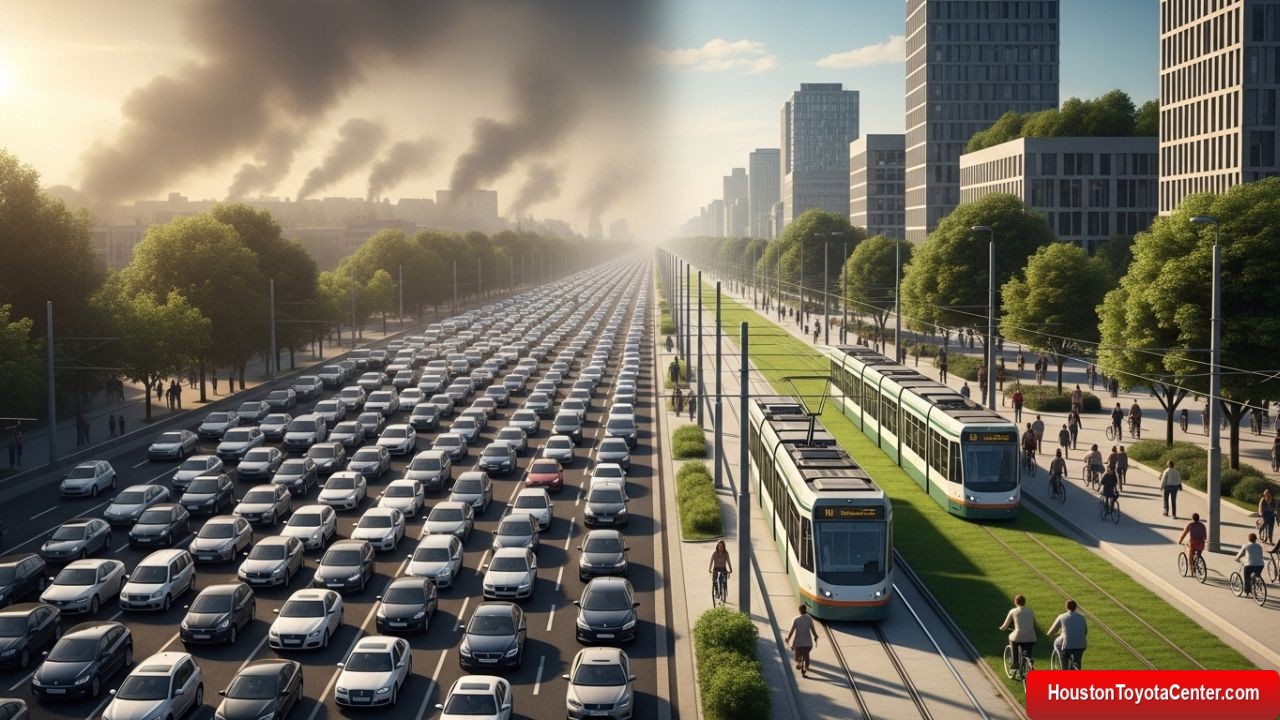
For more than a hundred years, personal car ownership has symbolized freedom, progress, and economic aspiration. The private automobile reshaped cities, redefined work-life boundaries, and became deeply embedded in cultural identity—especially in industrialized nations. Owning a car has long meant independence: the ability to travel on one’s own schedule, choose destinations freely, and maintain personal space in motion.
Yet in the early 21st century, this once-celebrated model is facing unprecedented scrutiny. Climate change, urban congestion, rising costs of living, technological disruption, and shifting social values are forcing societies to question a basic assumption: should most people own personal cars in the long term, or has the model become environmentally, economically, and socially unsustainable?
This debate is not simply about transportation preferences. It touches on energy systems, land use, public health, equity, geopolitics, and the future of cities themselves. While some argue that cleaner technologies like electric vehicles will preserve personal car ownership without its downsides, others contend that the very concept of millions of privately owned vehicles—most sitting idle most of the time—is fundamentally inefficient and incompatible with a sustainable future.
This article explores the sustainability of personal car ownership from multiple angles: environmental impact, economic realities, urban design, social equity, technological change, and cultural psychology. Rather than offering a simplistic yes-or-no answer, it examines whether personal car ownership as we know it can realistically endure—and if so, in what form.
FREE: Quickly identify and understand problems with your vehicle 🚘
CLICK HEREUnderstanding Sustainability in the Context of Transportation
Before assessing car ownership, it is essential to clarify what “sustainability” means in this context. Sustainability is not limited to carbon emissions alone. It is a multidimensional concept encompassing:
- Environmental sustainability: resource consumption, emissions, land use, and ecological impact
- Economic sustainability: affordability for individuals and societies, infrastructure costs, long-term viability
- Social sustainability: equity, accessibility, public health, quality of life
- Systemic efficiency: how well resources are used relative to the benefits they provide
A transportation system can be considered sustainable only if it meets present mobility needs without compromising the ability of future generations to meet theirs. This definition sets a high bar—one that personal car ownership increasingly struggles to clear.
The Environmental Cost of Personal Car Ownership
Carbon Emissions and Climate Change
The transportation sector is one of the largest contributors to global greenhouse gas emissions, and private passenger vehicles account for a significant share. Internal combustion engine cars emit carbon dioxide, nitrogen oxides, and particulate matter, contributing not only to climate change but also to air pollution and public health crises.
Even as fuel efficiency improves, global car ownership continues to rise, especially in developing economies. The result is a phenomenon known as rebound effect: efficiency gains are offset by increased usage and total vehicle numbers.
Electric vehicles (EVs) are often presented as the solution. While EVs do reduce tailpipe emissions, they are not emission-free when considering:
- Electricity generation sources
- Battery production and raw material extraction
- Manufacturing emissions
- End-of-life disposal
In regions where electricity grids still rely heavily on fossil fuels, EVs merely shift emissions upstream rather than eliminating them.
Resource Extraction and Material Intensity
A typical car requires thousands of individual components made from steel, aluminum, copper, plastics, rubber, and increasingly rare minerals like lithium, cobalt, and nickel. The environmental footprint of extracting and processing these materials is substantial.
Battery production, in particular, raises serious sustainability questions. Mining operations can lead to water depletion, soil contamination, and human rights concerns. Scaling EV adoption to replace every internal combustion vehicle with an electric one would dramatically increase global demand for these resources, potentially creating new ecological and geopolitical pressures.
Land Use and Urban Sprawl
Personal cars do not only consume fuel; they consume space. Roads, highways, parking lots, and garages occupy enormous portions of urban land. In many cities, parking alone takes up more surface area than parks or housing.
Car-dependent development encourages urban sprawl, increasing travel distances and infrastructure costs while reducing walkability. This pattern locks cities into high-energy, high-emission lifestyles that are difficult to reverse.
Economic Sustainability: Who Really Pays for Car Ownership?
The True Cost to Individuals
While car ownership is often framed as a personal choice, it carries hidden and ongoing costs that extend far beyond the purchase price. These include:
- Fuel or electricity
- Maintenance and repairs
- Insurance
- Taxes and registration
- Depreciation
- Parking fees
For many households, transportation is the second-largest expense after housing. In some cases, car ownership can trap lower-income families in a cycle of debt, especially in areas where driving is not optional.
Public Costs and Subsidies
Car ownership is heavily subsidized, often invisibly. Governments fund road construction, maintenance, traffic policing, and emergency response largely through general taxation, not direct user fees. This means even non-drivers subsidize car-centric systems.
Healthcare costs related to air pollution, traffic accidents, and sedentary lifestyles also represent indirect economic burdens borne by society as a whole.
Comparative Cost Efficiency
The table below illustrates a simplified comparison of transportation models in terms of economic efficiency:
| Factor | Personal Car Ownership | Public Transit | Shared Mobility |
|---|---|---|---|
| Average utilization | Very low (cars idle ~95% of time) | High | Moderate to high |
| Infrastructure cost per user | High | Moderate | Low to moderate |
| Household financial burden | High | Low | Variable |
| Public subsidy reliance | High | High (but efficient) | Moderate |
From a systems perspective, personal car ownership is among the least economically efficient ways to provide mobility at scale.
Urban Congestion and Infrastructure Limits
The Congestion Paradox
Building more roads to accommodate more cars often leads to more traffic, not less. This phenomenon, known as induced demand, occurs when increased road capacity encourages additional driving until congestion returns to previous levels.
Cities around the world have discovered that no amount of highway expansion can permanently solve congestion if personal car ownership remains the dominant mode of transportation.
Aging Infrastructure and Maintenance Challenges
Roads, bridges, and tunnels require constant maintenance. In many countries, infrastructure is aging faster than governments can afford to repair it. Heavy personal vehicle use accelerates wear and tear, especially with the growing popularity of larger and heavier vehicles like SUVs and trucks.
This raises a critical question: Can societies afford to maintain car-centric infrastructure indefinitely?
Social and Equity Dimensions of Car Ownership
Mobility Inequality
Personal car ownership creates a mobility divide. Those who can afford cars enjoy greater access to jobs, education, healthcare, and social opportunities. Those who cannot are often marginalized, particularly in car-dependent regions with weak public transit.
Ironically, systems designed around cars often disadvantage the very groups they claim to empower: the elderly, the young, people with disabilities, and low-income populations.
Public Health Impacts
Car-centric societies tend to have higher rates of:
- Traffic fatalities and injuries
- Air pollution-related illnesses
- Sedentary lifestyles and associated diseases
While cars provide individual convenience, their aggregate impact can degrade public health outcomes.
Community and Social Interaction
Urban environments dominated by cars often sacrifice human-scale interaction. Wide roads, parking lots, and traffic noise discourage walking, socializing, and local commerce. Over time, this can erode community cohesion and reduce quality of life.
Technological Optimism: Can Innovation Save Car Ownership?
Electric Vehicles as a Partial Solution
Electric vehicles undeniably reduce local emissions and noise pollution. They represent a significant improvement over traditional combustion engines. However, EVs do not address several core issues:
- Traffic congestion
- Land use inefficiency
- Resource intensity
- Inequality of access
Replacing every gasoline car with an electric one would still leave cities crowded with vehicles and dependent on vast amounts of material and energy.
Autonomous Vehicles: Promise and Pitfalls
Self-driving technology is often promoted as a revolution that will make car ownership safer and more efficient. Potential benefits include:
- Reduced accidents
- Improved traffic flow
- Mobility for non-drivers
Yet autonomous vehicles could also increase total vehicle miles traveled if they make driving cheaper and more convenient. Empty vehicles repositioning themselves could worsen congestion rather than alleviate it.
Shared Mobility and Platform Economies
Car-sharing, ride-hailing, and subscription models challenge the idea that every individual needs to own a car. These systems increase utilization rates and reduce the total number of vehicles needed.
However, their sustainability depends heavily on regulation, integration with public transit, and labor practices. Without careful governance, shared mobility can undermine public transportation rather than complement it.
Cultural Attachment and Psychological Barriers
Cars as Identity and Status Symbols
For many people, cars are not merely tools; they are expressions of identity, success, and personal taste. Marketing, media, and decades of cultural reinforcement have tied car ownership to adulthood, freedom, and self-worth.
This emotional dimension complicates sustainability debates. Even when alternatives are cheaper or greener, people may resist giving up ownership due to perceived loss of autonomy or status.
The Illusion of Freedom
While cars promise freedom, they also impose constraints: traffic, maintenance, insurance, and dependency on fuel prices. In dense urban areas, car ownership can become more burdensome than liberating.
Recognizing this contradiction is key to shifting public perception toward more sustainable models.
Global Perspectives: Different Regions, Different Realities
Developed Economies
In many high-income countries, car ownership rates are plateauing or declining in urban centers. Younger generations are less likely to see ownership as essential, favoring flexibility and digital connectivity over physical possessions.
Developing Economies
In emerging markets, car ownership is still rising rapidly, driven by economic growth and aspirations tied to modernization. For these regions, sustainability debates must balance environmental concerns with legitimate desires for mobility and economic opportunity.
Lessons from Car-Light Cities
Cities that have invested heavily in public transit, cycling infrastructure, and pedestrian-friendly design demonstrate that high quality of life does not require high car ownership.
Examples include cities where:
- Car-free zones are expanding
- Public transit is reliable and affordable
- Mixed-use development reduces travel distances
These cases suggest that alternatives to widespread car ownership are not only possible but desirable.
The Long-Term Outlook: Evolution, Not Elimination
Is Personal Car Ownership Doomed?
Personal car ownership is unlikely to disappear entirely. In rural areas, remote regions, and certain professions, private vehicles will remain essential. The key question is not whether cars will exist, but how central they will be to everyday life.
Likely Trends
Over the long term, sustainability pressures are likely to drive:
- Reduced car ownership in dense urban areas
- Increased reliance on shared and multimodal transportation
- Smaller, lighter, and more efficient vehicles
- Policy measures that reflect true social and environmental costs
Policy and Governance as Deciding Factors
Markets alone will not determine the future of car ownership. Public policy—through zoning, pricing, taxation, and infrastructure investment—will play a decisive role in shaping outcomes.
Conclusion: A Conditional Future for Personal Car Ownership
So, is personal car ownership sustainable long-term?
The evidence suggests that widespread, default personal car ownership—especially in urban environments—is not sustainable in its current form. The environmental costs, economic inefficiencies, and social trade-offs are simply too large to ignore.
However, sustainability does not require abolishing cars altogether. It requires redefining their role. When personal vehicles are used selectively, powered cleanly, shared more efficiently, and integrated into broader mobility systems, they can coexist with sustainability goals.
The real debate, then, is not about cars versus no cars. It is about systems designed for people rather than vehicles, and about recognizing that true mobility is measured not by how many cars we own, but by how easily, safely, and equitably we can move through the world.
Leave a Reply