
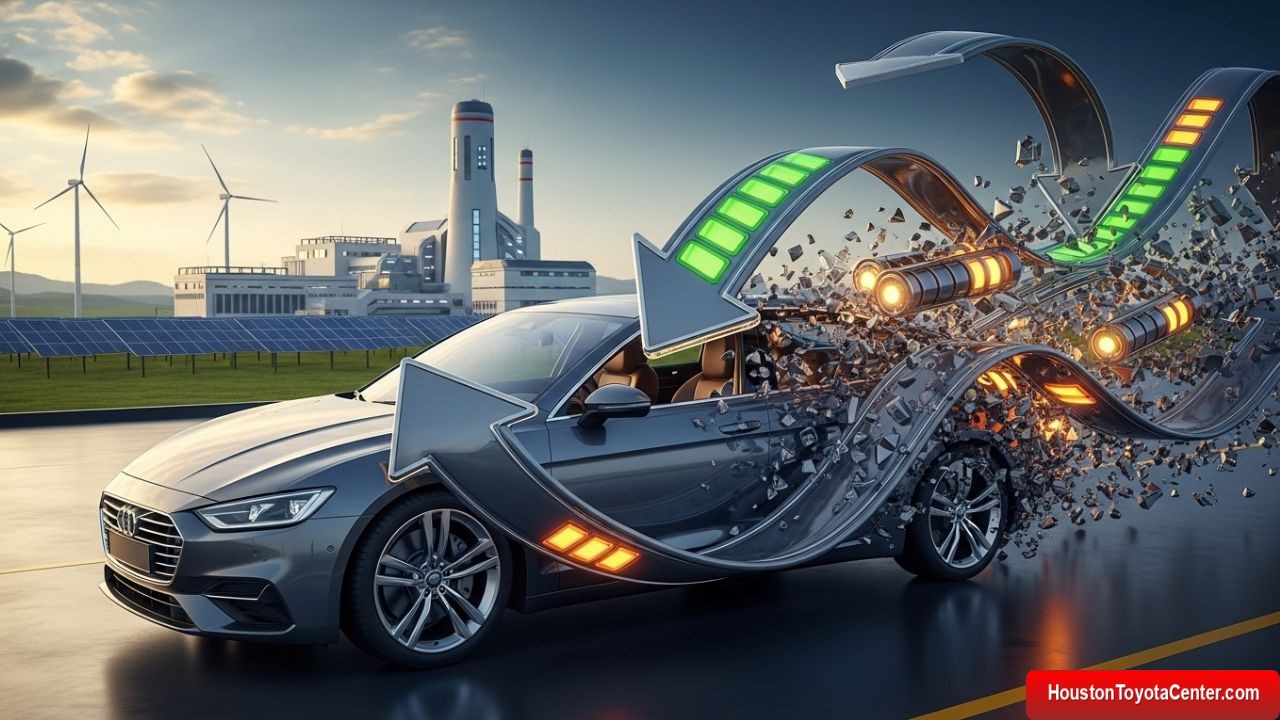
For more than a century, the automotive industry has operated under a predominantly linear economic model: extract raw materials, manufacture vehicles, sell them, use them, and ultimately discard them. This “take–make–dispose” approach helped fuel mass motorization and economic growth, but it also created profound environmental and social challenges. Resource depletion, waste accumulation, greenhouse gas emissions, and supply-chain vulnerabilities have become impossible to ignore.
In response, a growing number of automakers, suppliers, policymakers, and consumers are embracing circular economy principles. Rather than treating vehicles and components as disposable end products, the circular economy reframes them as temporary configurations of valuable materials that should be reused, repaired, remanufactured, and recycled over multiple life cycles.
Auto manufacturing sits at the heart of this transformation. Vehicles are complex systems made of thousands of components and dozens of material types, including steel, aluminum, plastics, glass, rubber, and increasingly, advanced electronics and batteries. Because of this complexity, the automotive sector is both one of the largest resource consumers and one of the biggest opportunities for circular innovation.
This article explores the global push for circular economy principles in auto manufacturing: what it means, why it matters, how it is being implemented, the technologies enabling it, the challenges slowing adoption, and the strategic advantages for companies that lead the transition.
FREE: Quickly identify and understand problems with your vehicle 🚘
CLICK HEREUnderstanding the Circular Economy in the Automotive Context
What Is a Circular Economy?
A circular economy is an economic system designed to eliminate waste and continuously circulate resources at their highest possible value. Unlike linear models, it emphasizes:
- Designing out waste and pollution
- Keeping products and materials in use
- Regenerating natural systems
In auto manufacturing, this means thinking beyond vehicle sales and considering the entire lifecycle of a car—from material sourcing and production to use, maintenance, disassembly, and material recovery.
Why the Automotive Industry Is Central to Circularity
The automotive sector is uniquely positioned to benefit from circular principles because:
- Vehicles contain high-value materials that are recoverable.
- Cars are durable goods with long lifespans.
- Manufacturing volumes are large, making circular practices scalable.
- Regulatory pressure is increasing globally.
- Electrification is forcing a rethink of materials and supply chains.
Drivers Behind the Push for Circular Auto Manufacturing
Environmental Pressure and Climate Commitments
Transportation is a major contributor to global greenhouse gas emissions. While much attention is placed on tailpipe emissions, manufacturing itself accounts for a significant portion of a vehicle’s lifetime carbon footprint.
Circular practices—such as using recycled materials, extending vehicle life, and reducing waste—can dramatically lower emissions associated with production.
Resource Scarcity and Volatile Supply Chains
Modern vehicles rely on materials that are increasingly scarce or geopolitically sensitive, including:
- Lithium
- Cobalt
- Nickel
- Rare earth elements
- High-grade aluminum
Circular strategies reduce dependency on virgin resources and improve supply resilience by keeping materials within controlled loops.
Regulatory and Policy Pressure
Governments worldwide are introducing regulations that encourage or mandate circularity, including:
- End-of-life vehicle (ELV) directives
- Recycled content requirements
- Extended producer responsibility (EPR) laws
- Carbon pricing and reporting standards
Automakers that fail to adapt risk fines, restricted market access, and reputational damage.
Changing Consumer Expectations
Today’s consumers increasingly value sustainability, transparency, and ethical sourcing. Circular initiatives help brands:
- Build trust
- Differentiate in competitive markets
- Appeal to environmentally conscious buyers
Key Circular Economy Principles Applied to Auto Manufacturing
Design for Circularity
Circularity begins at the design stage. Vehicles designed for disassembly, repair, and material recovery are far easier to circulate in closed loops.
Key design strategies include:
- Modular components
- Standardized fasteners
- Reduced material complexity
- Clear material labeling
Material Circularity
Material circularity focuses on keeping raw materials in use for as long as possible at the highest quality level.
This includes:
- Using recycled steel and aluminum
- Incorporating bio-based plastics
- Eliminating hazardous substances that complicate recycling
Product Life Extension
Extending the useful life of vehicles and components is often the most resource-efficient strategy.
Approaches include:
- Durable engineering
- Software updates instead of hardware replacement
- Predictive maintenance
- Certified refurbished vehicles
Closed-Loop Manufacturing
Closed-loop systems return production scrap and end-of-life materials back into manufacturing processes, reducing waste and raw material demand.
Circular Strategies Across the Vehicle Lifecycle
1. Raw Material Sourcing
Circular sourcing prioritizes:
- Recycled metals
- Renewable materials
- Traceable supply chains
- Ethical mining practices when virgin materials are unavoidable
2. Manufacturing and Assembly
Factories are being redesigned to:
- Reduce scrap rates
- Capture and reuse offcuts
- Minimize water and energy use
- Integrate digital monitoring for waste streams
3. Distribution and Use Phase
During the use phase, circularity focuses on:
- Fuel efficiency and electrification
- Software-enabled upgrades
- Shared mobility and fleet optimization
4. End-of-Life and Beyond
At end of life, vehicles should be:
- Easily dismantled
- Components reused or remanufactured
- Materials recycled at high quality
- Waste minimized or eliminated
Remanufacturing: A Cornerstone of Circular Auto Manufacturing
Remanufacturing involves restoring used components to like-new condition.
Common remanufactured parts include:
- Engines
- Transmissions
- Starters and alternators
- Electric motors
- Battery modules
Benefits of Remanufacturing
| Aspect | Benefit |
|---|---|
| Environmental | Lower emissions and energy use |
| Economic | Reduced production costs |
| Supply Chain | Improved availability of parts |
| Customer | Lower prices and reliable quality |
Remanufacturing often uses 70–90% less material than producing new parts.
Recycling and Material Recovery Innovations
Metal Recycling
Steel and aluminum are highly recyclable, but quality loss can occur if materials are mixed improperly. Advanced sorting and alloy-specific recycling processes are improving outcomes.
Plastics Recycling Challenges
Automotive plastics are complex due to:
- Multiple polymer types
- Additives and coatings
- Composite structures
Innovations include chemical recycling, which breaks plastics back into molecular building blocks.
Battery Recycling for Electric Vehicles
Electric vehicle (EV) batteries are a critical focus of circular strategies.
Recycling processes aim to recover:
- Lithium
- Cobalt
- Nickel
- Copper
- Graphite
Battery circularity includes second-life applications, such as stationary energy storage, before final material recovery.
Digital Technologies Enabling Circularity
Digital Twins
Digital twins simulate vehicle components throughout their lifecycle, enabling:
- Predictive maintenance
- Optimized material use
- Improved disassembly planning
Blockchain for Traceability
Blockchain technology supports transparent tracking of materials, helping ensure recycled content claims and ethical sourcing.
Artificial Intelligence and Data Analytics
AI optimizes:
- Material flows
- Production efficiency
- Waste reduction
- Demand forecasting for remanufactured parts
Business Models Supporting Circular Auto Manufacturing
Product-as-a-Service
Instead of selling vehicles outright, companies offer mobility services, retaining ownership and control over assets.
Benefits include:
- Easier recovery at end of life
- Incentives for durability
- Predictable material flows
Leasing and Subscription Models
Leasing aligns financial incentives with long-term value preservation, encouraging manufacturers to design for longevity.
Certified Used and Refurbished Programs
Automakers are expanding certified pre-owned and refurbished vehicle programs to capture value beyond first ownership.
Economic Advantages of Circular Practices
Contrary to the belief that sustainability increases costs, circularity often improves profitability.
Cost Reduction
- Lower raw material expenses
- Reduced waste disposal costs
- Energy savings
Revenue Diversification
- Remanufactured parts sales
- Mobility services
- Data-driven services
Risk Mitigation
- Reduced exposure to material price volatility
- Stronger regulatory compliance
- Improved brand resilience
Challenges and Barriers to Adoption
Design Legacy Issues
Many existing vehicle platforms were not designed for disassembly or recycling, making circular retrofits difficult.
Complex Global Supply Chains
Circularity requires coordination across thousands of suppliers, often spread across multiple countries.
Economic Trade-Offs
Upfront investment in circular infrastructure can be significant, even if long-term savings are substantial.
Technological Limitations
Some materials and composites remain difficult to recycle efficiently at scale.
Policy and Regulatory Landscape
Governments play a crucial role in accelerating circular auto manufacturing.
Key policy tools include:
- Minimum recycled content requirements
- End-of-life vehicle recovery targets
- Tax incentives for remanufacturing
- Public procurement standards
Regions with strong policy support tend to see faster adoption and innovation.
Measuring Circularity in Auto Manufacturing
Metrics are essential to track progress.
Common indicators include:
| Metric | Description |
|---|---|
| Recycled Content | Percentage of recycled material used |
| Recovery Rate | Share of vehicle materials recovered |
| Lifecycle Emissions | Total carbon footprint per vehicle |
| Material Intensity | Material used per unit of output |
| Product Longevity | Average vehicle lifespan |
Standardized measurement frameworks are still evolving.
The Role of Collaboration and Ecosystems
No single company can achieve circularity alone.
Successful initiatives often involve:
- OEMs and suppliers
- Recycling and remanufacturing partners
- Technology providers
- Governments and NGOs
Shared platforms, data standards, and joint ventures are becoming common.
Circular Economy and the Electric Vehicle Transition
Electrification and circularity are deeply interconnected.
EVs introduce new challenges:
- Battery material scarcity
- Complex electronics
- Rapid technology evolution
But they also offer new opportunities for:
- Modular design
- Software-driven upgrades
- Second-life energy storage
Future Outlook: What Comes Next
The push for circular economy principles in auto manufacturing is not a temporary trend—it is a structural shift.
In the coming years, we can expect:
- Circular design becoming the default
- Stronger regulatory enforcement
- Greater consumer awareness
- Advanced recycling technologies reaching scale
- Circular performance influencing brand value and investor decisions
Manufacturers that lead this transition will not only reduce environmental impact but also gain a durable competitive advantage.
Conclusion: Redefining Value in the Automotive Industry
The circular economy challenges the automotive industry to rethink what value truly means. Instead of maximizing short-term sales volume, circular auto manufacturing focuses on long-term material stewardship, resilience, and shared prosperity.
By designing vehicles for longevity, embracing remanufacturing, investing in recycling innovation, and aligning business models with circular principles, automakers can transform environmental responsibility into strategic strength.
The push toward circularity is reshaping how cars are designed, built, used, and reborn—and it is redefining the future of mobility itself.
Leave a Reply