
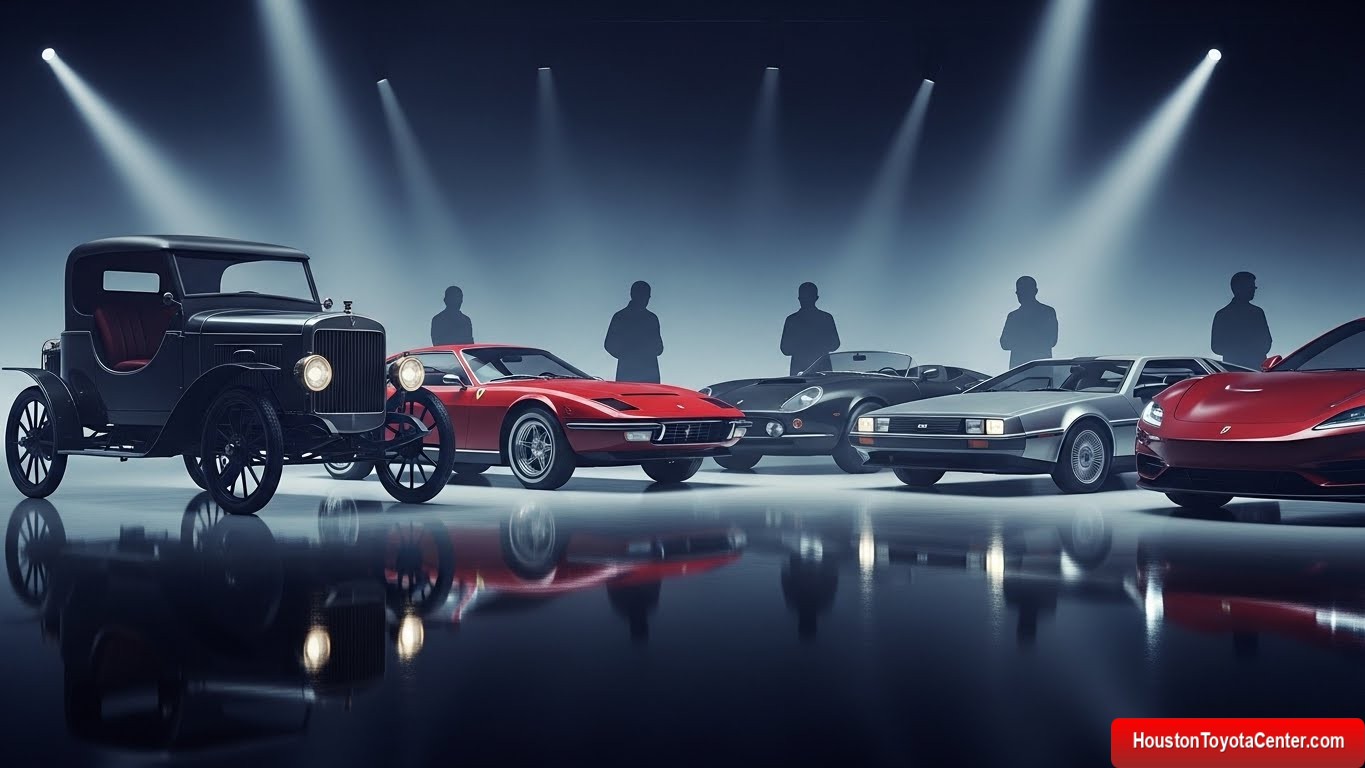
The history of the automobile is not merely a chronicle of machines; it is a story of imagination, courage, engineering mastery, and an unrelenting desire to push the boundaries of mobility. From the earliest motorized contraptions to the sleek electric vehicles gliding silently through modern streets, the automobile’s evolution has been guided by brilliant engineers and visionary designers. Their contributions have shaped not only automotive technology but the culture, industry, and dreams of generations.
This article explores some of the most influential automotive engineers and designers in history—figures whose creativity and technical excellence forever transformed the way vehicles look, feel, and perform. Some of these names are well known to enthusiasts, while others remain unsung heroes behind iconic machines. Together, their stories weave the narrative of a technology that reshaped the world.
1. Karl Benz: The Father of the Automobile
When discussing automotive pioneers, the conversation inevitably begins with Karl Benz, a German engineer whose 1885 Benz Patent-Motorwagen is widely regarded as the first true automobile. Benz was not merely an inventor; he was a visionary who believed in practical, self-propelled transportation long before society was ready to embrace the idea.
Engineering Milestones
- Invented the first practical internal combustion engine designed specifically for automobiles
- Developed the three-wheeled Motorwagen with a rear-mounted single-cylinder engine
- Created early automotive components such as carburetors, spark plugs, and gear systems
Impact
Karl Benz’s achievements laid the foundation for the global automotive industry. Without his engineering breakthroughs, the mass mobility revolution of the 20th century would have looked very different.
FREE: Quickly identify and understand problems with your vehicle 🚘
CLICK HERE2. Henry Ford: Master of Mass Production
Although Henry Ford did not invent the automobile, he transformed the industry by democratizing car ownership. Through standardization and the moving assembly line, he made automobiles affordable to the average person.
Key Contributions
- Introduced the assembly line to vehicle manufacturing in 1913
- Created the Model T, arguably the most influential car of the early 20th century
- Implemented worker-friendly policies such as the five-dollar workday
Legacy
Ford revolutionized not just automotive production but modern industrial manufacturing itself. His engineering philosophy—efficiency, reliability, and affordability—continues to shape global production methods across industries.
3. Ferdinand Porsche: Engineering Genius Behind Icons
Few engineers have a portfolio as diverse and impactful as Ferdinand Porsche. From early electric vehicles to the Volkswagen Beetle to the high-performance cars bearing his name today, Porsche’s innovations span a vast technological spectrum.
Career Highlights
- Developed early hybrid electric vehicles as early as 1899
- Designed the Volkswagen Beetle, one of the best-selling cars of all time
- Founded Porsche, a company known for engineering excellence in sports cars
- Engineered military and racing vehicles with unprecedented performance
Influence
Porsche’s ability to merge mechanical precision with practical design set him apart. He had a rare talent: envisioning what mobility could be and turning it into mechanical reality.
4. Soichiro Honda: The Engineer with a Racing Spirit
Soichiro Honda, founder of Honda Motor Co., is celebrated for blending engineering innovation with an infectious passion for racing. A self-taught mechanic, he built Honda from a small workshop into one of the world’s largest automotive and motorcycle manufacturers.
Innovations
- Pioneered the use of lightweight, high-revving engines
- Developed advanced VTEC (Variable Valve Timing and Lift Electronic Control) technology
- Set new standards in engine efficiency and reliability
Philosophy
Soichiro Honda believed failure was a teacher. His engineering approach embraced experimentation and bold ideas, often decades ahead of competitors.
5. Enzo Ferrari: From Racing Driver to Legendary Car Maker
Enzo Ferrari is synonymous with racing excellence. Before founding the world-renowned marque, Ferrari was a successful race car driver and team manager. His relentless pursuit of speed and performance defined Ferrari’s engineering DNA.
Core Achievements
- Built race-focused engines that dominated motorsport
- Applied track innovations to road cars, leading to iconic models such as the 250 GTO and Testarossa
- Fostered a culture of engineering excellence centered around precision and passion
Cultural Impact
Ferrari cars transcend engineering—they are symbols of aspiration, craftsmanship, and emotional automotive design.
6. Giorgetto Giugiaro: The Most Influential Car Designer in History
Often called “Car Designer of the Century,” Giorgetto Giugiaro’s work is so widespread that nearly every driver has seen or ridden in one of his creations. His portfolio includes more than 200 production cars.
Notable Designs
- Volkswagen Golf Mk1, a design still influencing hatchbacks today
- DeLorean DMC-12, forever immortalized by Back to the Future
- Lotus Esprit, one of the most iconic wedge-shaped sports cars
- BMW M1, a legend in performance engineering
Design Philosophy
Giugiaro became famous for creating timeless, functional shapes—vehicles that were stylish yet never excessive. His influence is felt in everything from supercars to family sedans.
7. Colin Chapman: Innovator of Lightweight Engineering
Founder of Lotus Cars, Colin Chapman changed motorsport forever. His mantra—“Simplify, then add lightness”—shaped some of the most agile and innovative race cars ever built.
Engineering Breakthroughs
- Pioneered monocoque chassis construction
- Innovated ground-effect aerodynamics in Formula 1
- Achieved extreme performance through weight reduction
Legacy
Many modern performance vehicles—from supercars to racing prototypes—still rely on the principles Chapman championed decades ago.
8. Harley Earl: Father of Automotive Styling
In an era when cars were built mostly for mechanical function, Harley Earl brought the idea that automobiles should also be beautiful. As the head of GM’s Art and Color Section, he effectively invented the role of the automotive designer.
Major Contributions
- Created the first concept car: the Buick Y-Job
- Introduced tailfins, which became an American design hallmark in the 1950s
- Championed clay modeling in automotive design
- Popularized two-tone paint schemes and modern interior design
Lasting Impact
Earl’s work established the belief that car design should evoke emotion, identity, and aspiration—principles still central to automotive styling.
9. Carroll Shelby: The Performance Visionary
Carroll Shelby was not only a driver but one of the most influential performance engineers of the 20th century. His partnership with Ford produced legends like the Shelby Cobra and GT40, cars that reshaped American motorsport.
Signature Achievements
- Developed the lightweight Shelby Cobra with unmatched performance
- Helped Ford defeat Ferrari at Le Mans with the GT40
- Elevated American muscle cars with the Shelby Mustang series
Engineering Philosophy
Shelby believed passion and practicality could coexist—his designs combined brute force with surprising elegance.
10. Walter Owen Bentley: Luxury and Engineering Mastery
Founder of Bentley Motors, W.O. Bentley believed in making “a fast car, a good car, the best in its class.” His engineering prowess resulted in early Bentley models dominating endurance racing.
Highlights
- Created high-performance engines using aluminum pistons
- Led Bentley to multiple victories at Le Mans in the 1920s
- Set standards for refined, powerful grand tourers
Enduring Legacy
Bentley’s philosophy lives on in the modern brand, known for luxurious cars built with engineering precision.
11. Tadao Baba: The Father of the Japanese Superbike Legacy
Though known primarily in the motorcycle world, Tadao Baba also influenced automotive engineering principles regarding weight, balance, and responsive handling.
Notable Contributions
- Created the Honda CBR900RR, a revolution in performance engineering
- Brought lightweight design principles into mainstream performance engineering
- Influenced vehicle dynamics research used in later automotive models
Baba’s approach helped bridge the gap between motorcycle racing aggression and automobile handling finesse.
12. Franz von Holzhausen: Modern Design Visionary at Tesla
As Tesla’s chief designer, Franz von Holzhausen has reshaped the visual identity of electric vehicles. His work helped make EVs not only efficient, but aspirational.
Important Models
- Tesla Model S – sleek, minimalist, groundbreaking
- Model 3 – a global best-seller
- Cybertruck – a radical reinvention of pickup design
- Model X and Model Y – modern EV staples
Design Philosophy
Von Holzhausen emphasizes simplicity, aerodynamics, and futuristic minimalism. His work marks a new era in the shift toward sustainable mobility.
13. Table: Selected Designers and Their Most Iconic Works
Below is a quick reference summarizing major automotive designers and their signature creations:
| Designer / Engineer | Iconic Work | Key Innovation | Era |
|---|---|---|---|
| Karl Benz | Patent Motorwagen | First gasoline-powered automobile | 1880s |
| Henry Ford | Model T | Mass production | 1900s–1920s |
| Ferdinand Porsche | VW Beetle | Early hybrid & iconic designs | 1930s–1950s |
| Soichiro Honda | VTEC engines | High-rev efficiency | 1960s–1990s |
| Enzo Ferrari | Ferrari 250 series | Racing-to-road engineering | 1950s–1980s |
| Giorgetto Giugiaro | VW Golf, DeLorean | Modern compact design | 1970s–1990s |
| Colin Chapman | Lotus 25 | Lightweight monocoque | 1960s |
| Harley Earl | Buick Y-Job | Automotive styling revolution | 1930s–1950s |
| Carroll Shelby | Shelby Cobra | American performance surge | 1960s |
| Franz von Holzhausen | Tesla Model S | EV minimalism | 2010s–present |
14. Modern Innovators Changing the Future
In the 21st century, automotive engineering and design are evolving faster than ever. New leaders are emerging in electrification, autonomous driving, alternative materials, and software-focused mobility.
Key Areas of Innovation
- Electric powertrains with instant torque and high efficiency
- Self-driving systems using AI and neural networks
- Lightweight composite materials such as carbon fiber and magnesium alloys
- Sustainable design emphasizing recyclability and minimal environmental impact
Visionaries from companies like Rivian, Lucid Motors, Rimac, and BYD continue to push boundaries previously thought unreachable.
15. Common Traits of Great Automotive Engineers and Designers
Across generations, these innovators share similar qualities:
Creativity
Visualizing solutions that others cannot see.
Technical Expertise
Understanding mechanical, electrical, and material principles in depth.
Fearlessness
Pushing boundaries often means embracing criticism, risk, and failure.
Passion
A deep love for machines, mobility, and human experience.
Legacy Driven
Their work continues influencing design and engineering decades after their careers peak.
16. Conclusion: The Road Ahead
Automotive evolution is a long journey powered by human ingenuity. From Karl Benz’s first motorized carriage to Tesla’s futuristic EVs, each era has been shaped by individuals whose imaginations defied convention. Today, design and engineering continue converging into a new frontier—one where vehicles communicate, drive themselves, and tread lightly on the planet.
The famous automotive engineers and designers highlighted here remind us that innovation is never static. It is a living process, continually renewed by bold thinkers. As long as people dream of speed, freedom, beauty, and sustainability, there will always be new pioneers redefining what a vehicle can be.
Leave a Reply